March 11-21
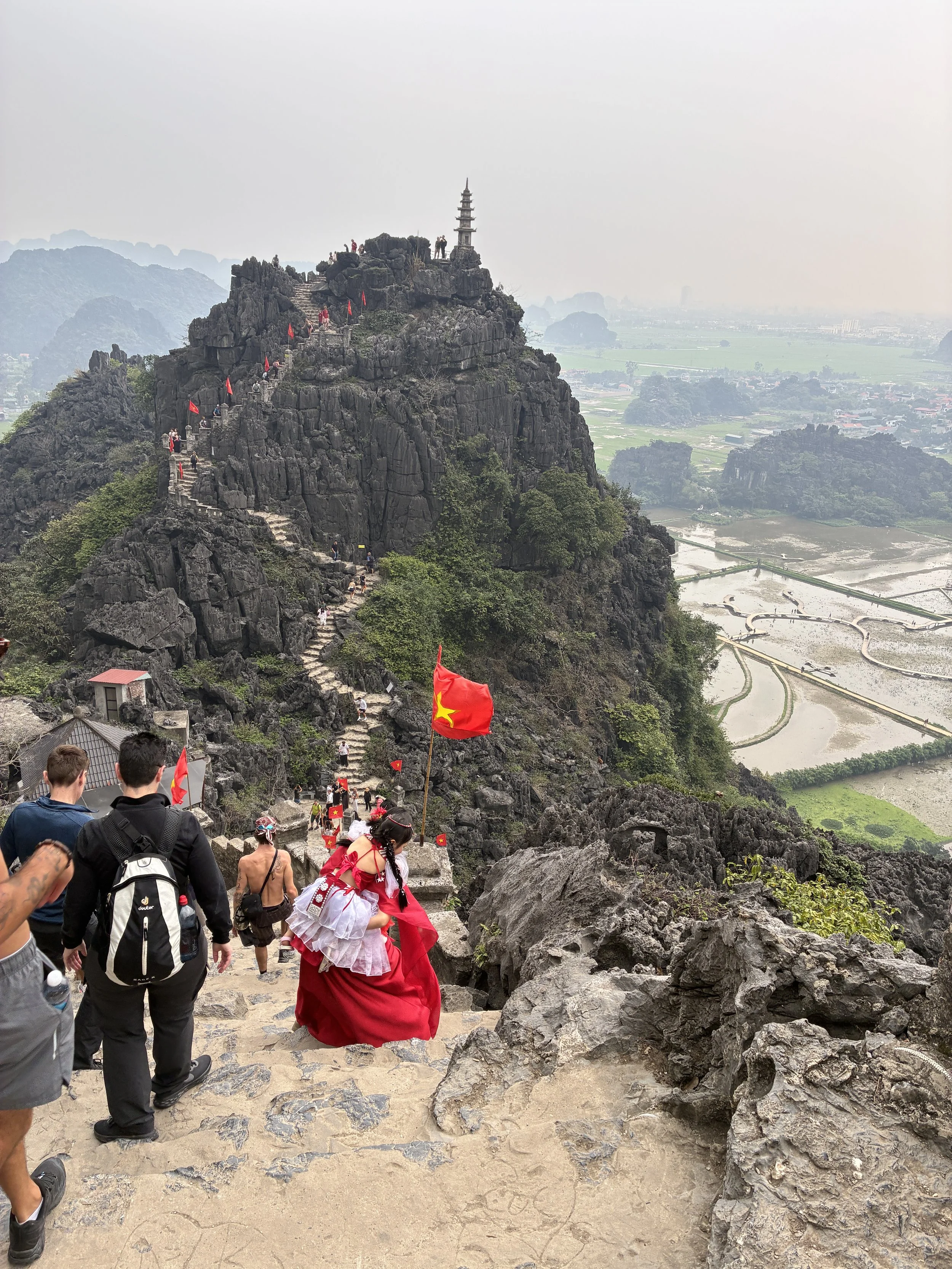
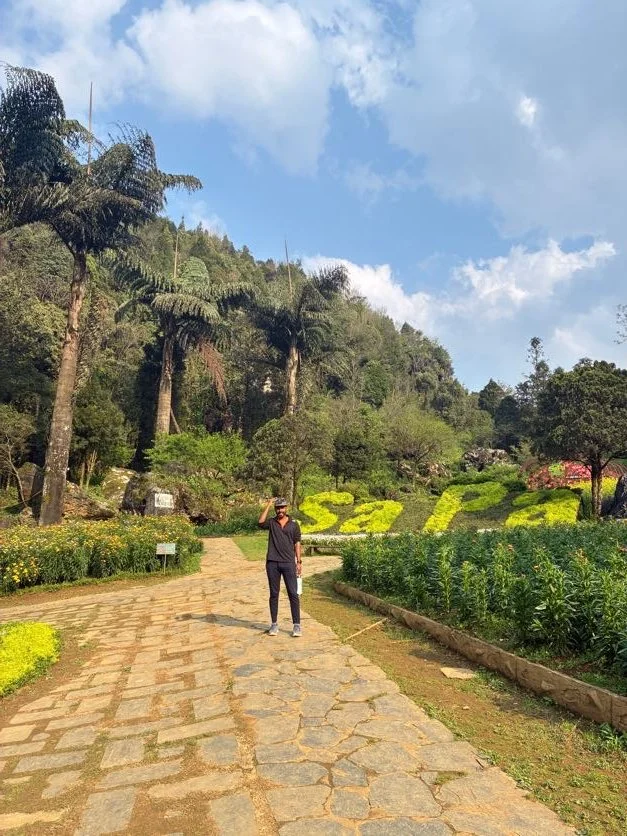
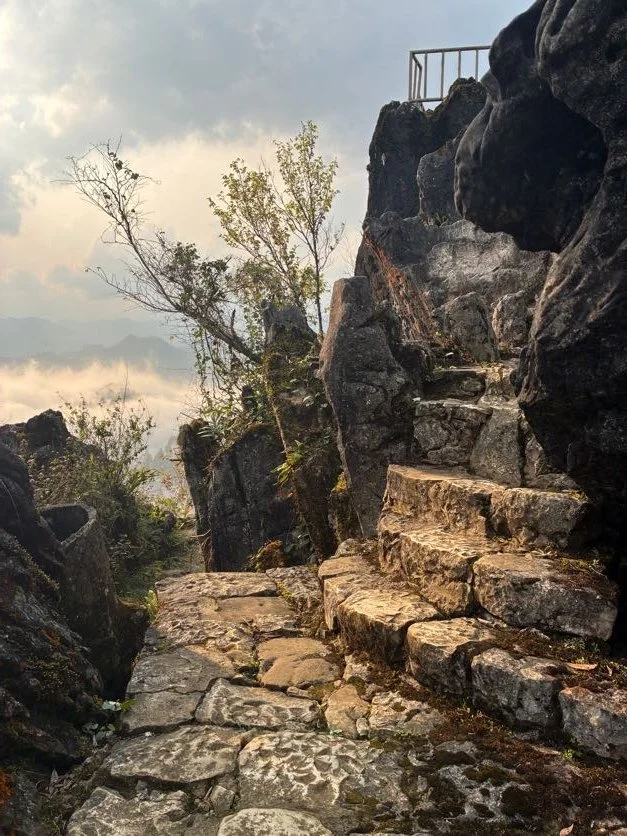
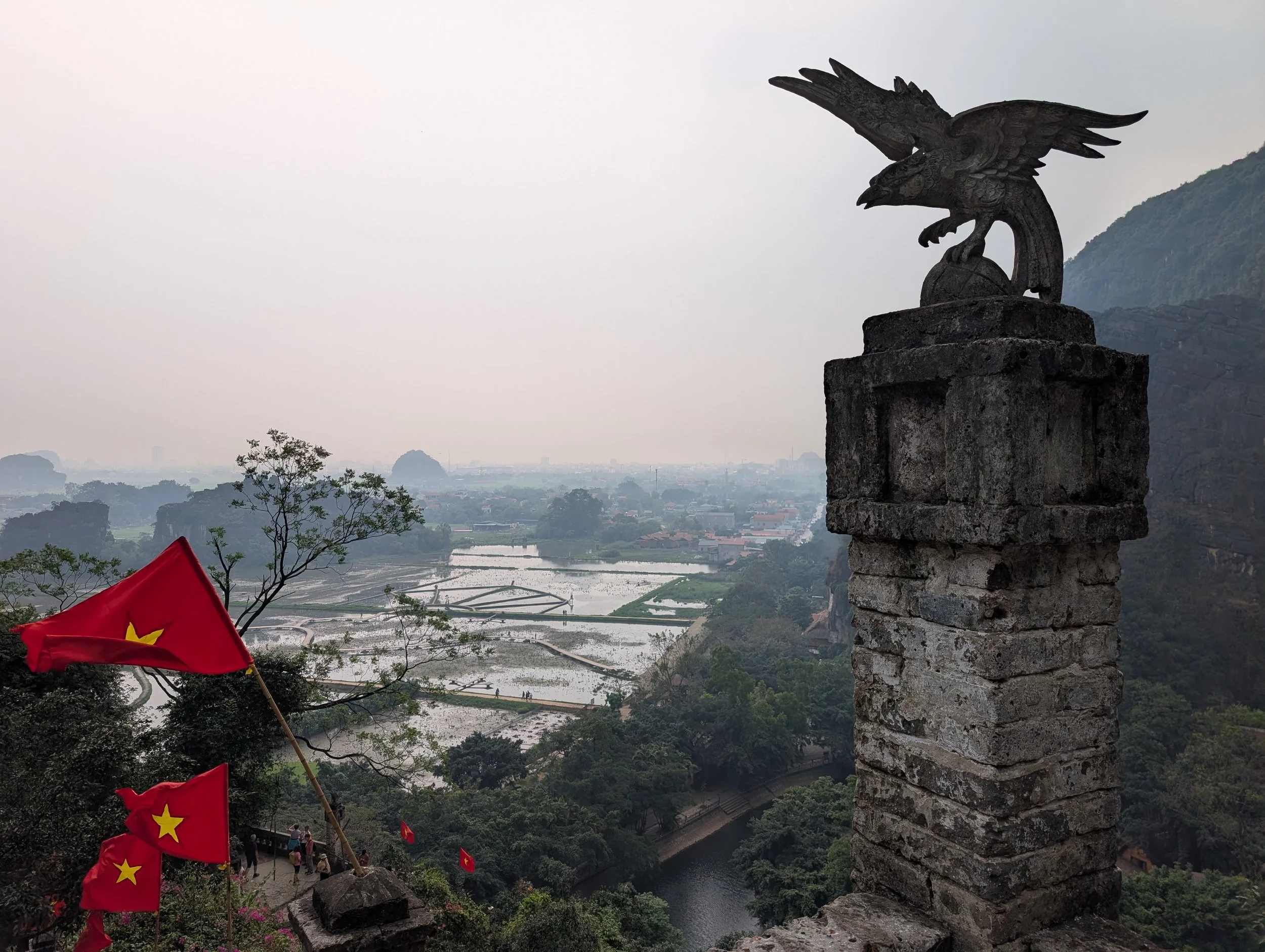
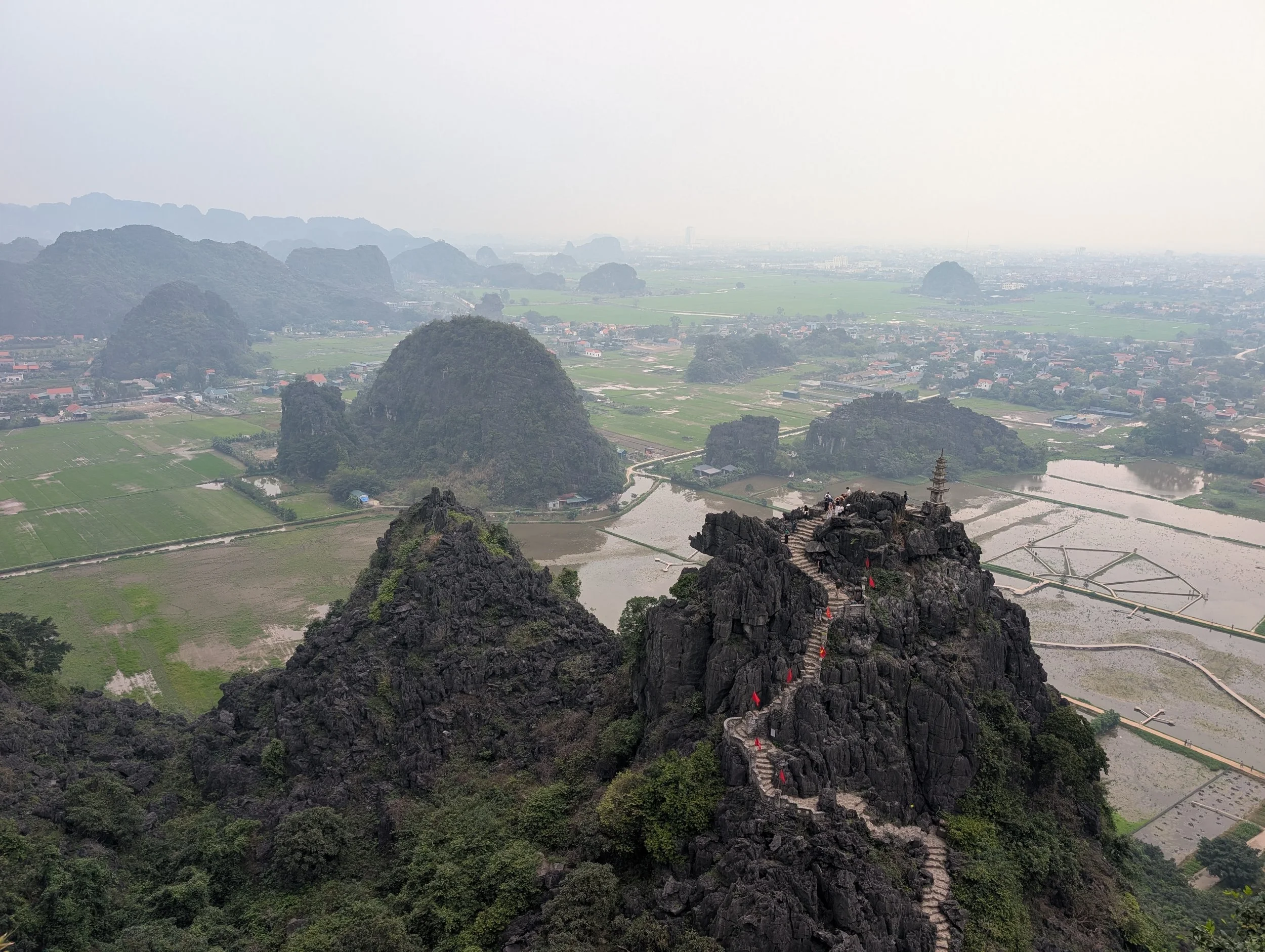
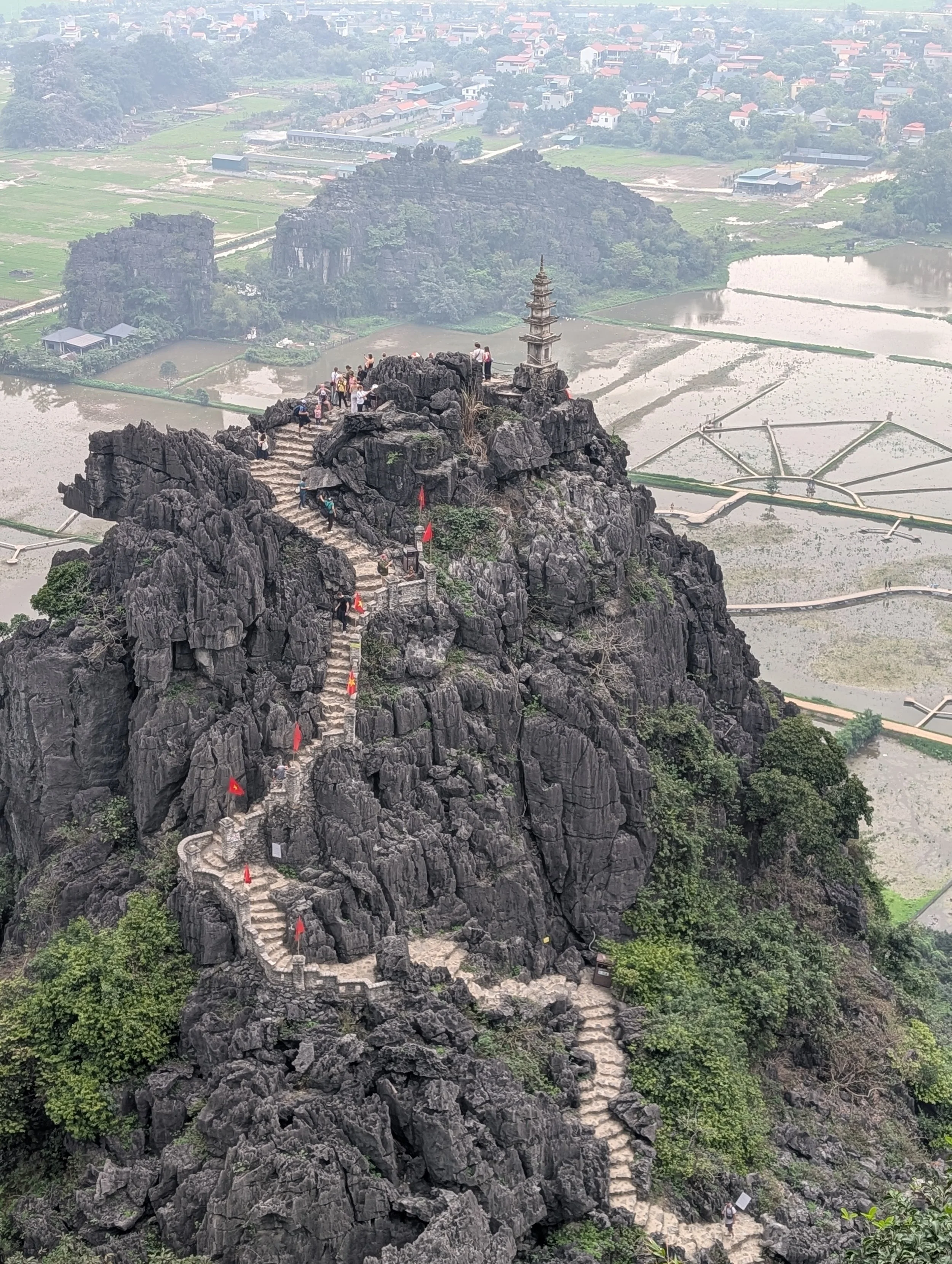
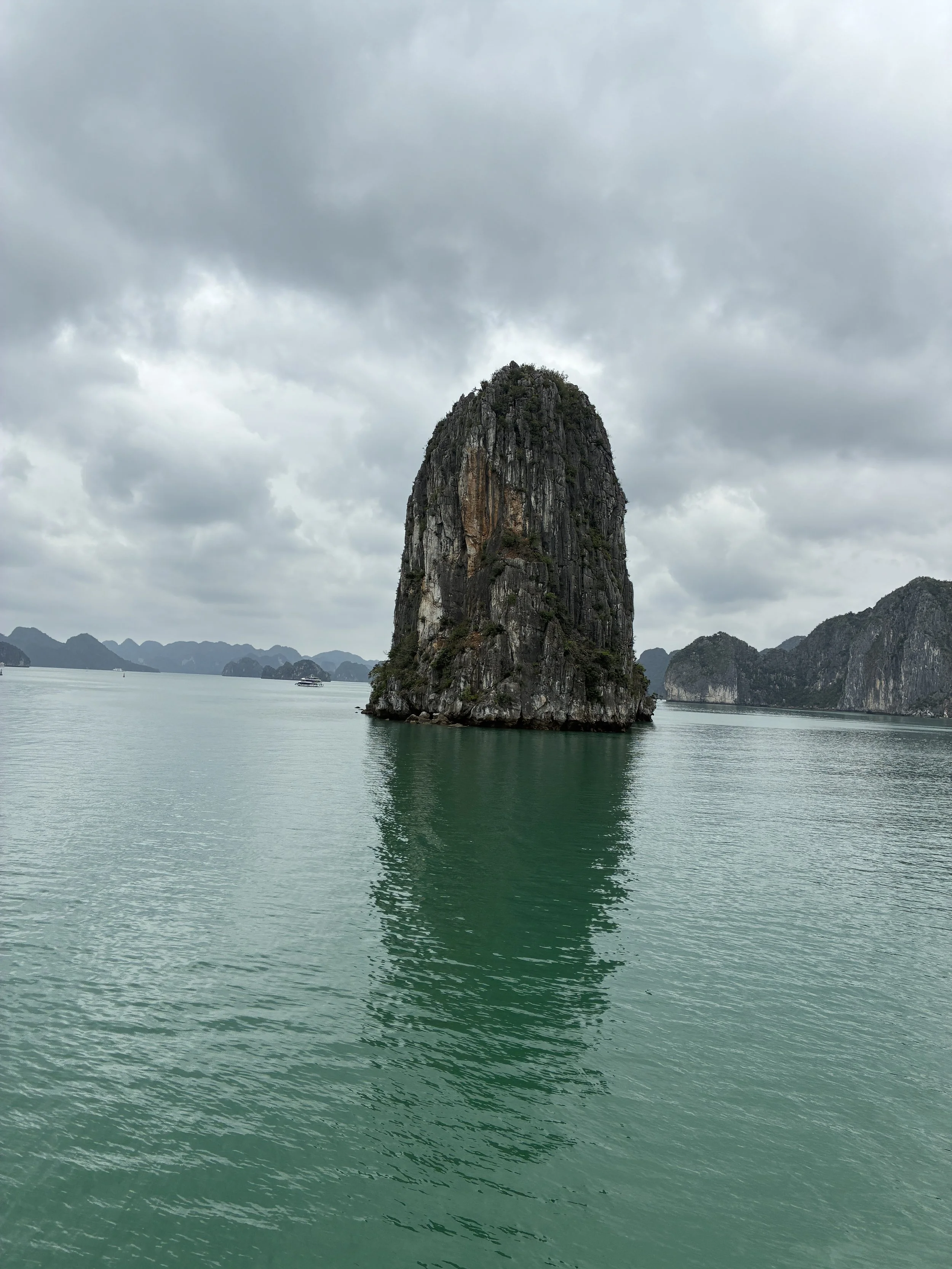
In Vietnam, we fell into a whirlpool of tourists. Descending the steep stairs of Dragon Hill, surrounded by limestone spires and caves, we also marveled at the bare-chested gym boys, Instagram queens, and mother-daughter duos in matching dresses. Five decades after "Across Asia on the Cheap" launched Lonely Planet Publications, Southeast Asia is an epicenter of tourism. If I was more disciplined, a close analysis of the digital nomads and the gap-year travelers would be on your desk. Alas, here are just a few notes from the field:
49% of Europeans smoke in stylish athletic apparel (girls, we are wearing mocha, sage, or terracotta; blends, unclear, but I suspect a 90% polyester + 10% spandex mix for optimal wicking and shape retention).
15% Instagram couples from the US will be in your way at some point.
10% of Israelis travel after conscription (they are a little rowdy in the cafes = easy to identify).
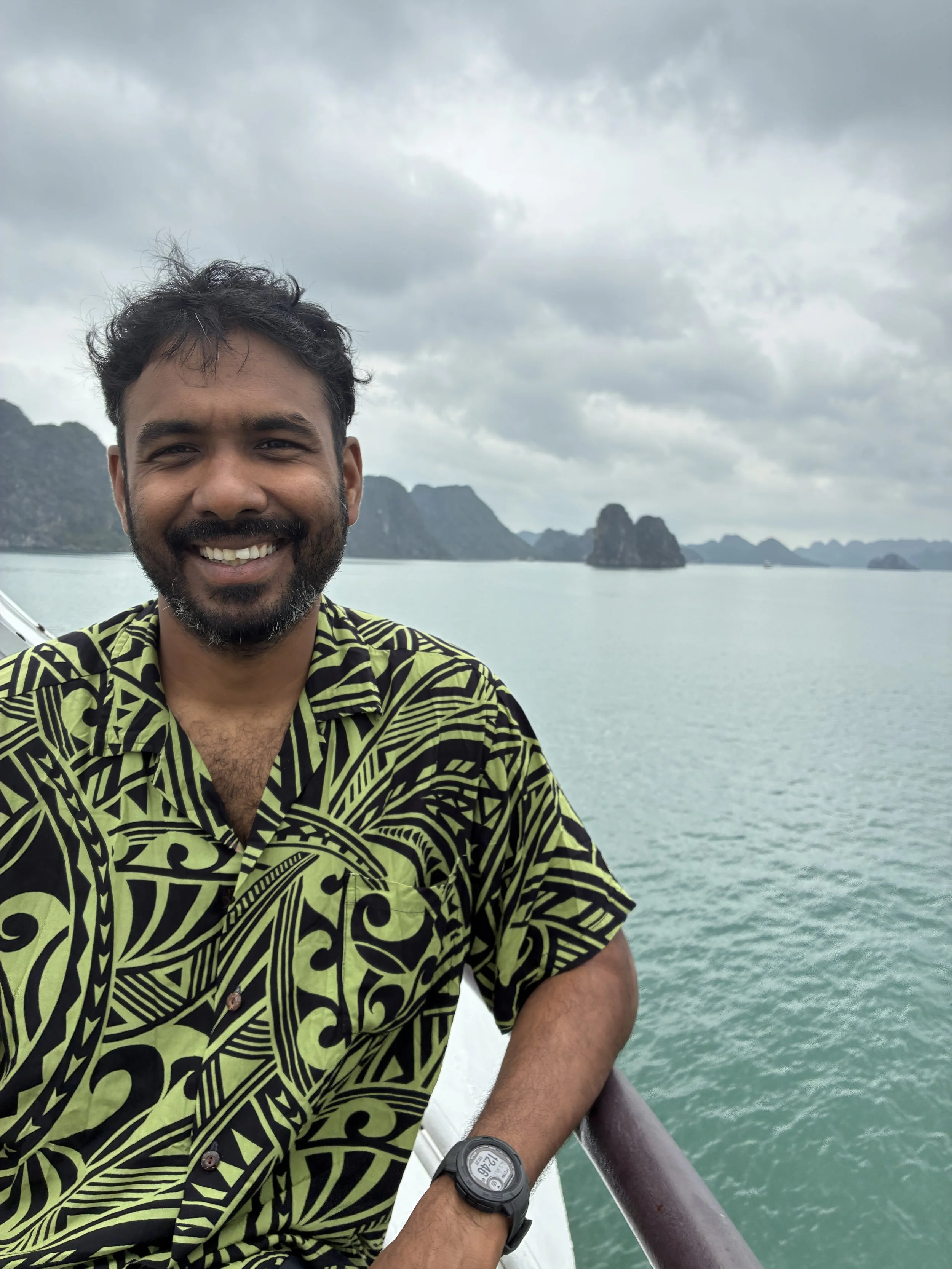
2% Russian soldiers are on holiday (this is a shockingly cheerful bunch generally in a jacuzzi cruising Halong Bay).
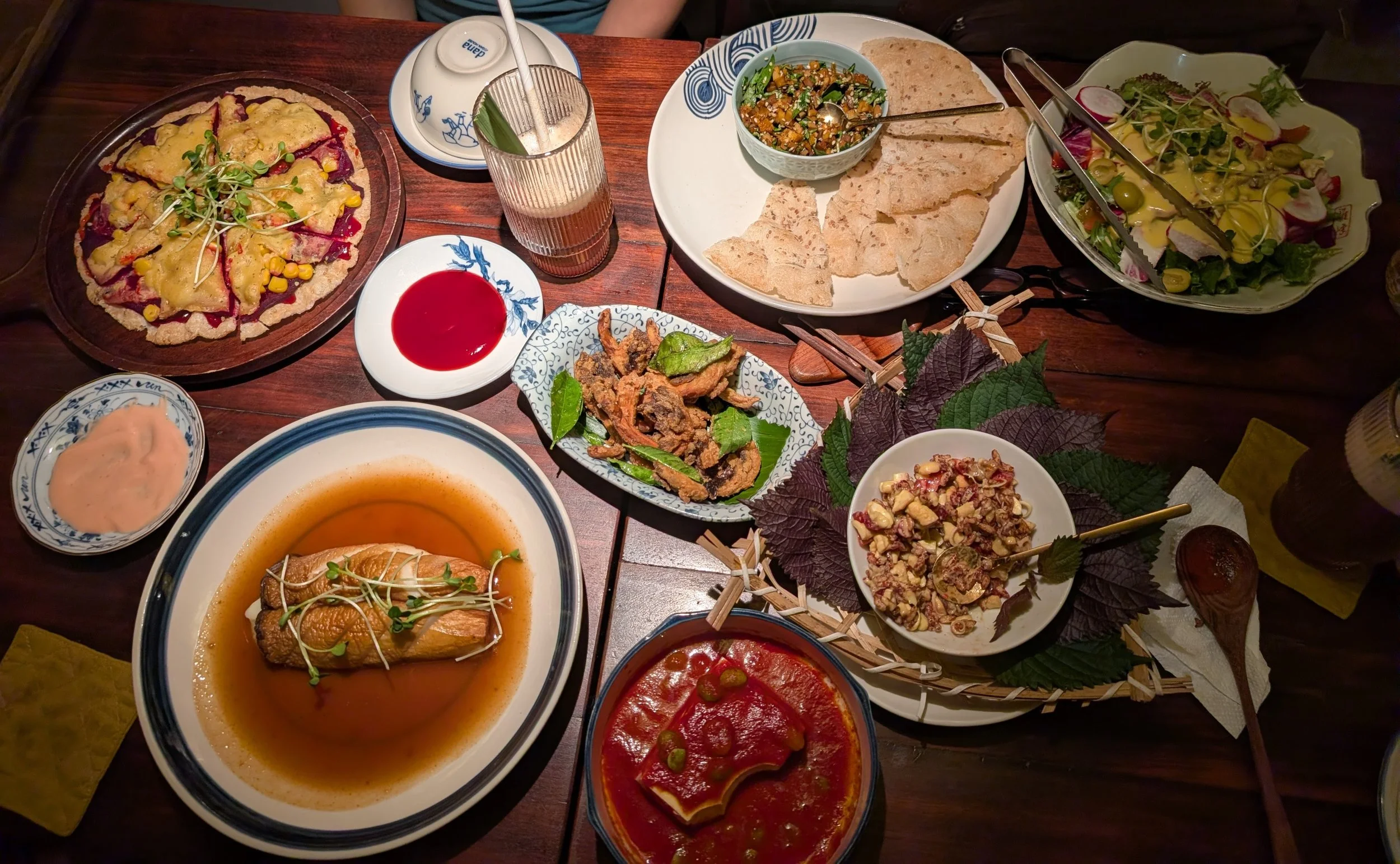
We joined this migratory highway and glimpse ourselves in the sideview mirror. We too, were searching for transformation while spending the least amount of money possible. (Where else can you find an opulent tasting menu for $20 except in the Old Quarter?) We too want a selfie in Halong Bay.
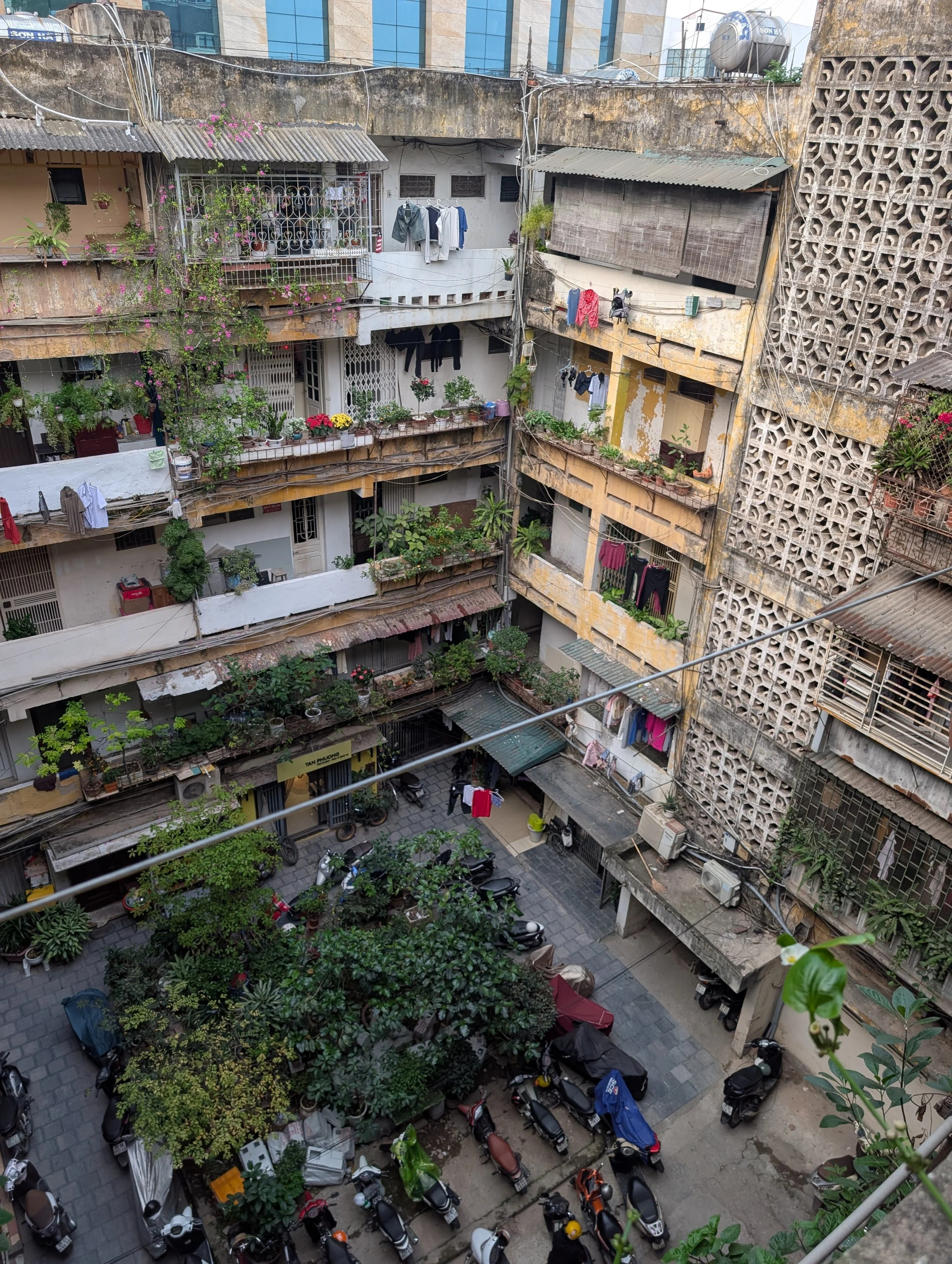
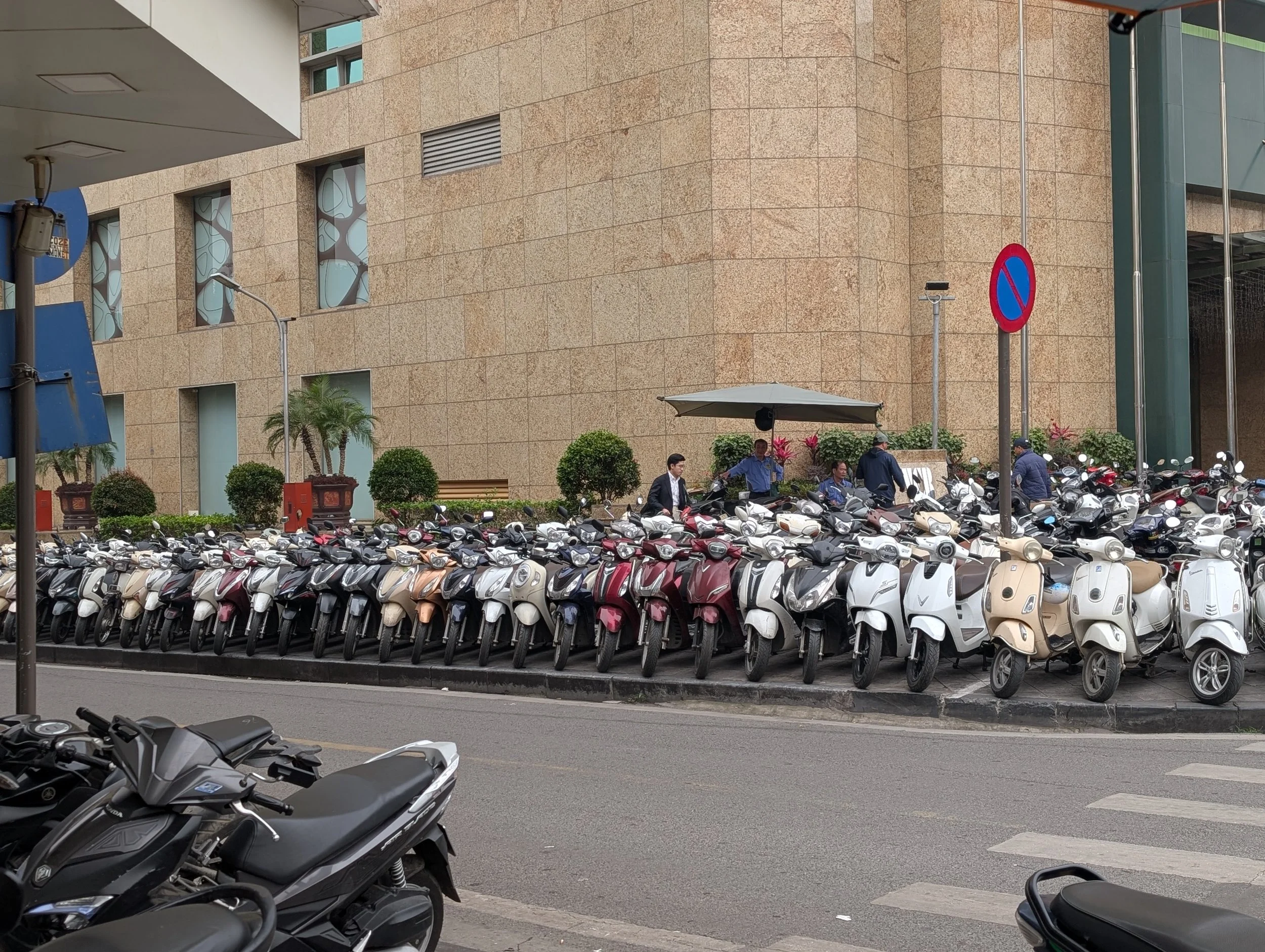
Amid the pandemonium, other choreographies are at work. In Hanoi, scooters lined up in perfect harmony and neighbors danced in synchrony in the park. Elders, working class men, and commuters sat shoulder to shoulder on small stools, smoking, drinking tea, getting breakfast. I remember seeing a couple on a motorcycle weaving their way through town, maybe a long workday ahead. She was asleep, her head draped over his shoulder, her arms around him in an easy embrace. Meanwhile tourists jostled through the streets toward banh mi and egg coffee while we sped past in a sleeper bus.
Throughout this trip I keep returning to the same questions about tourism. Is it a shallow, exploitative spectacle or does it bring meaningful development to a region? Does it amplify the texture of local culture or slowly dissolve it into performance?
Probably both.
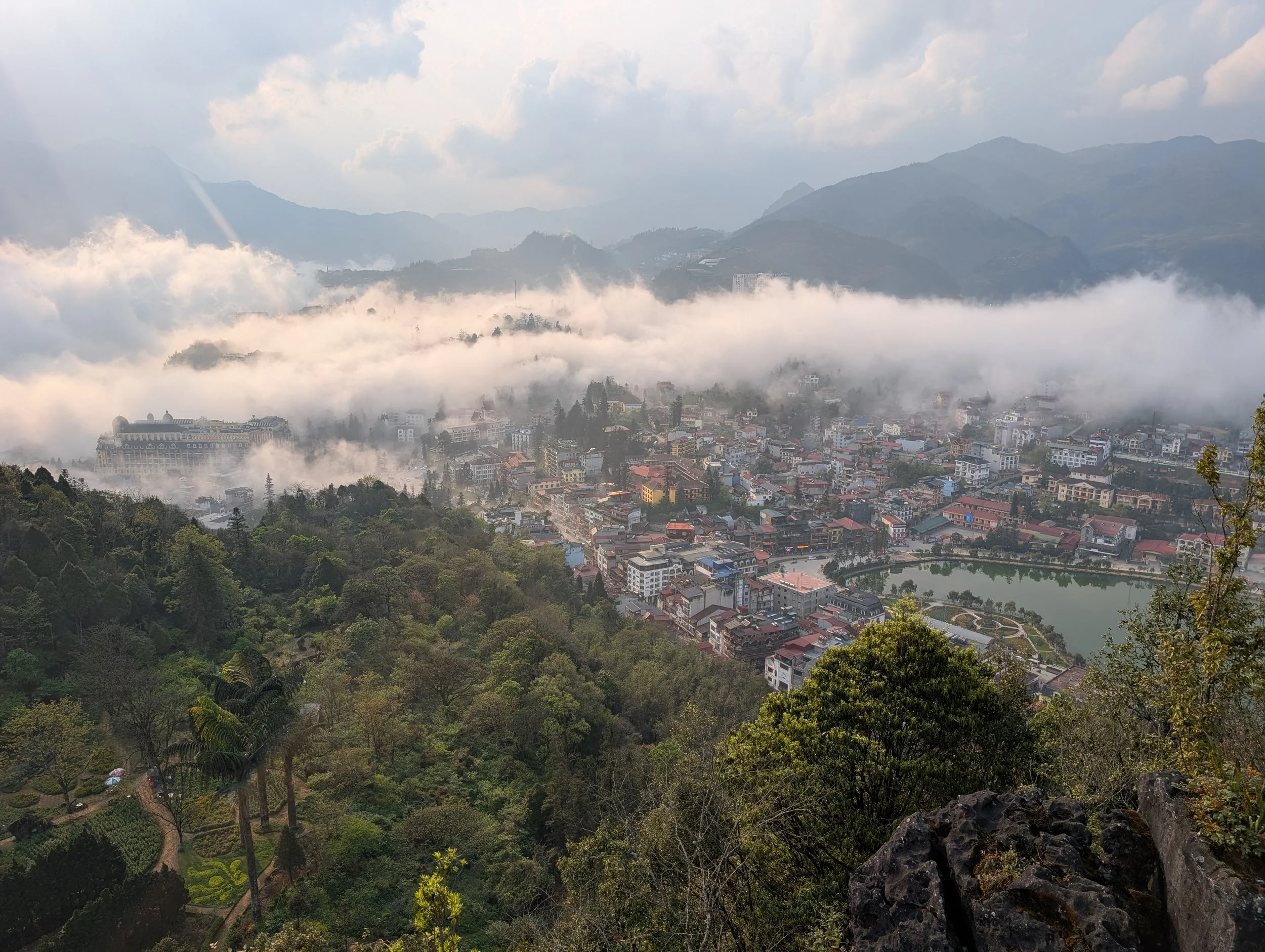
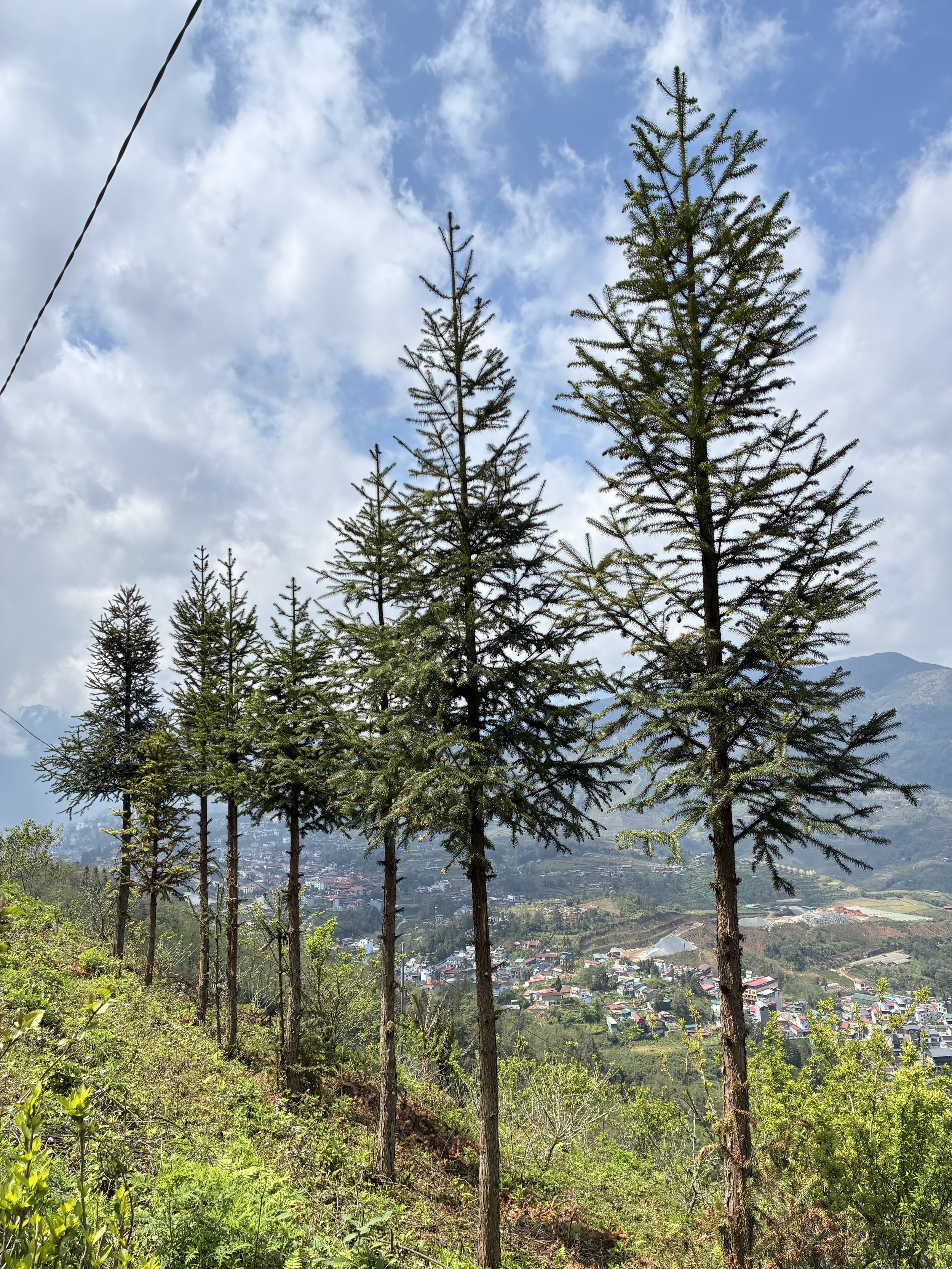
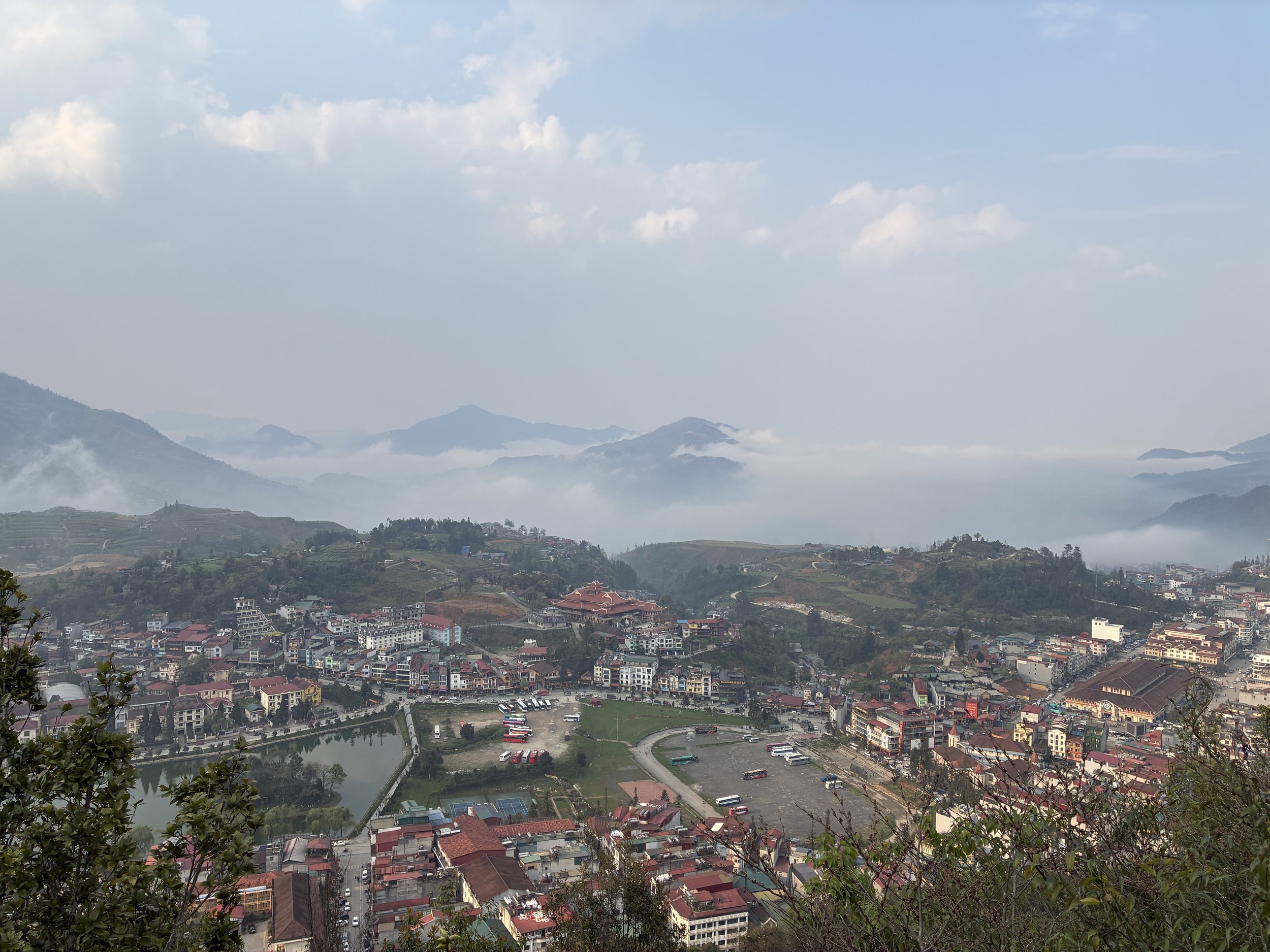
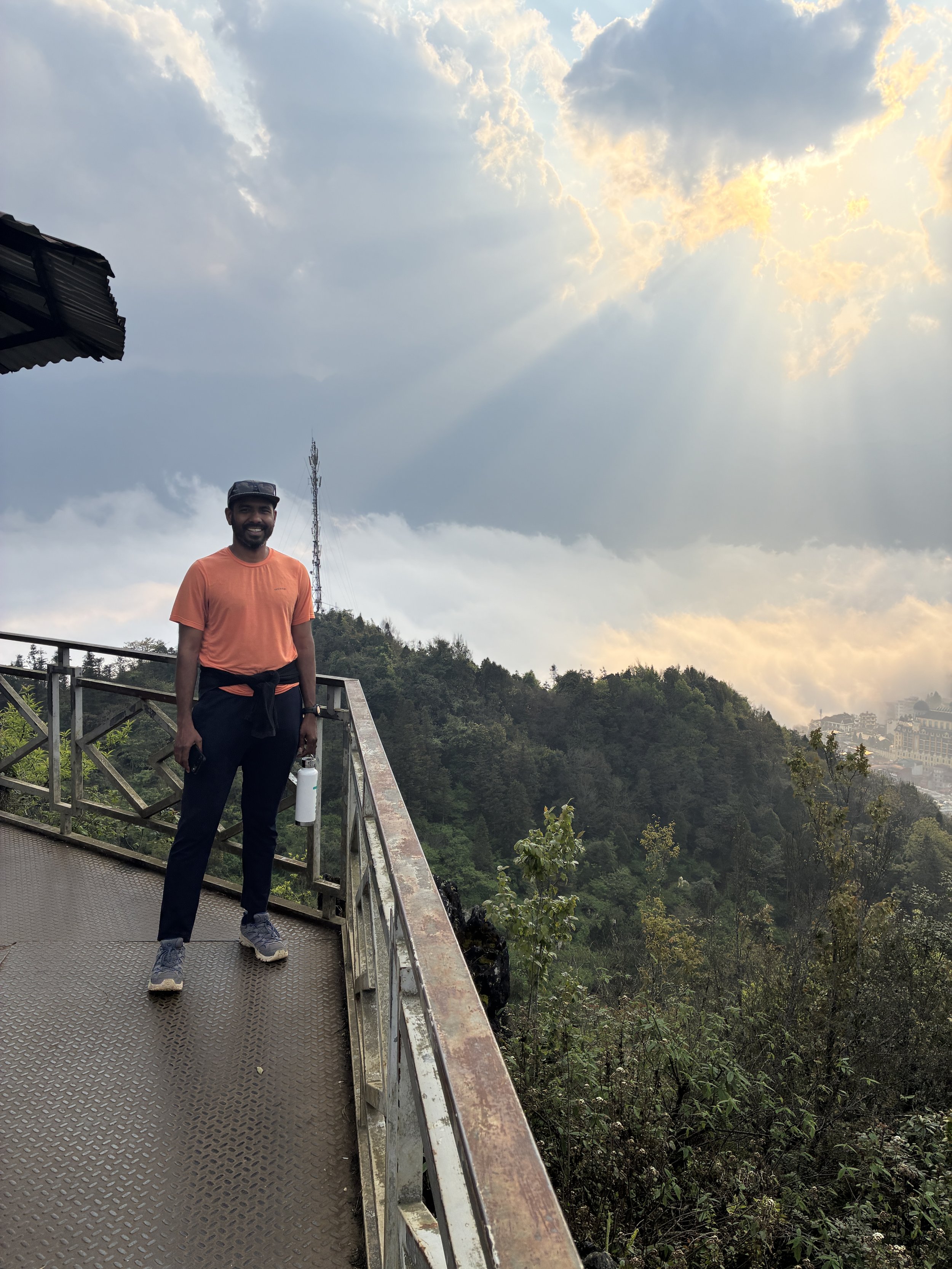
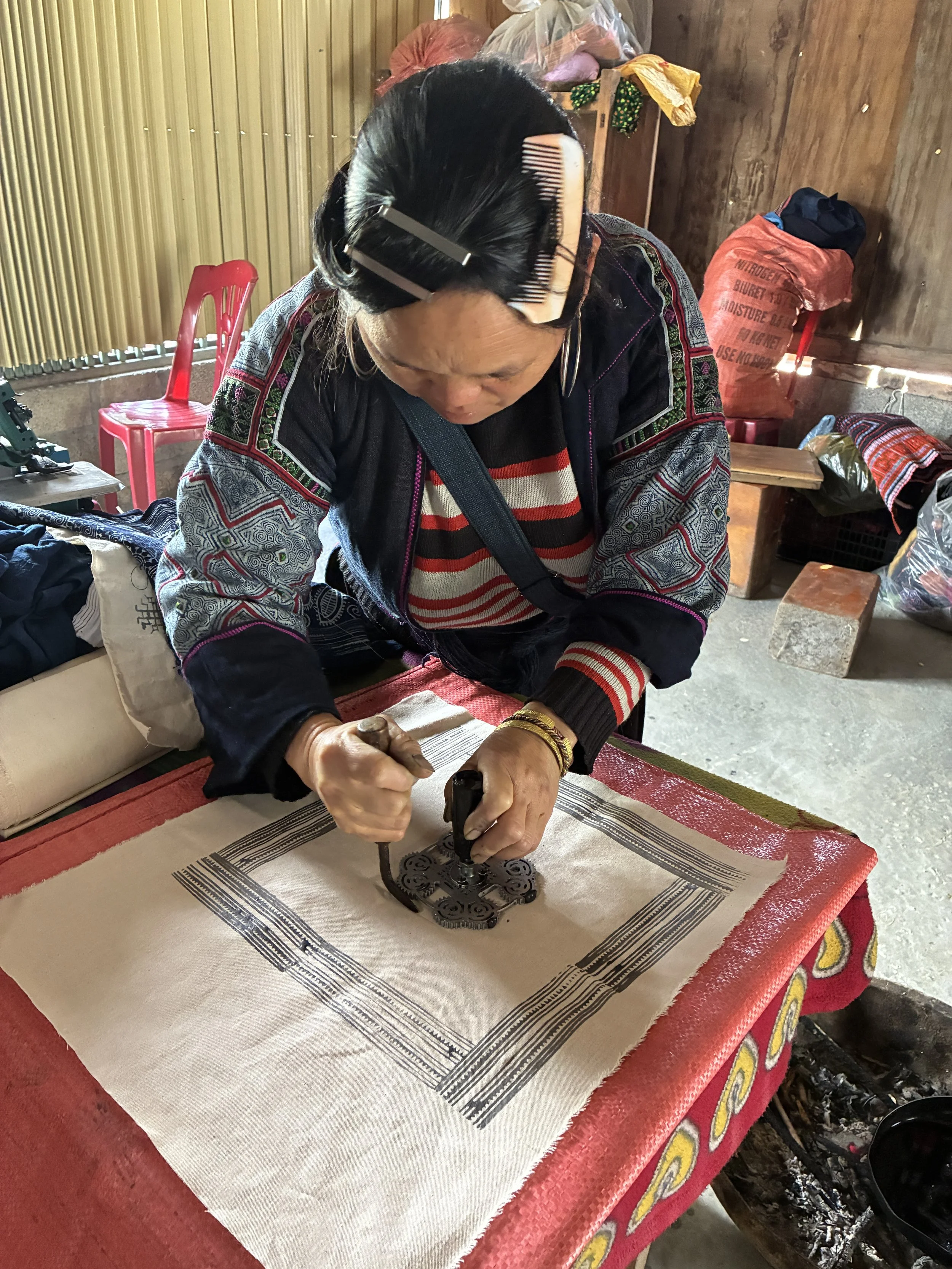
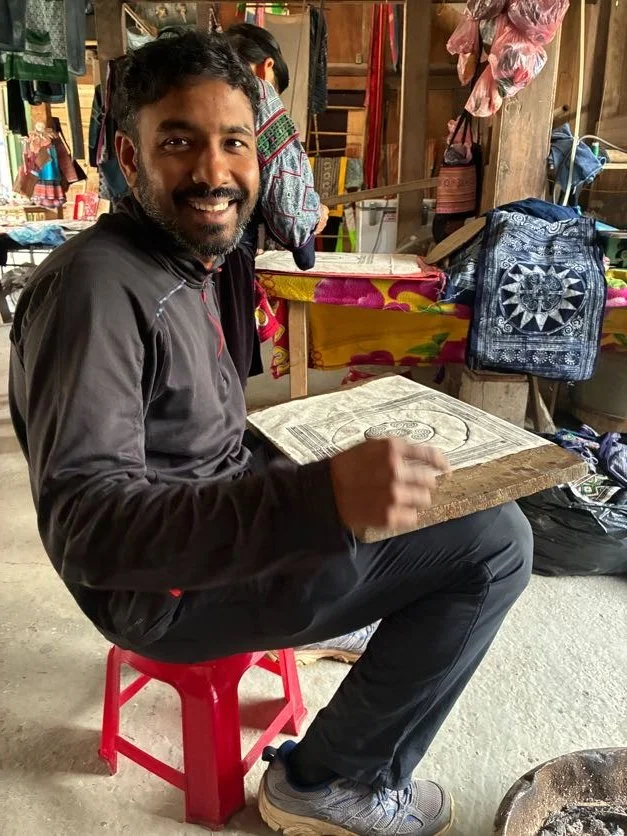
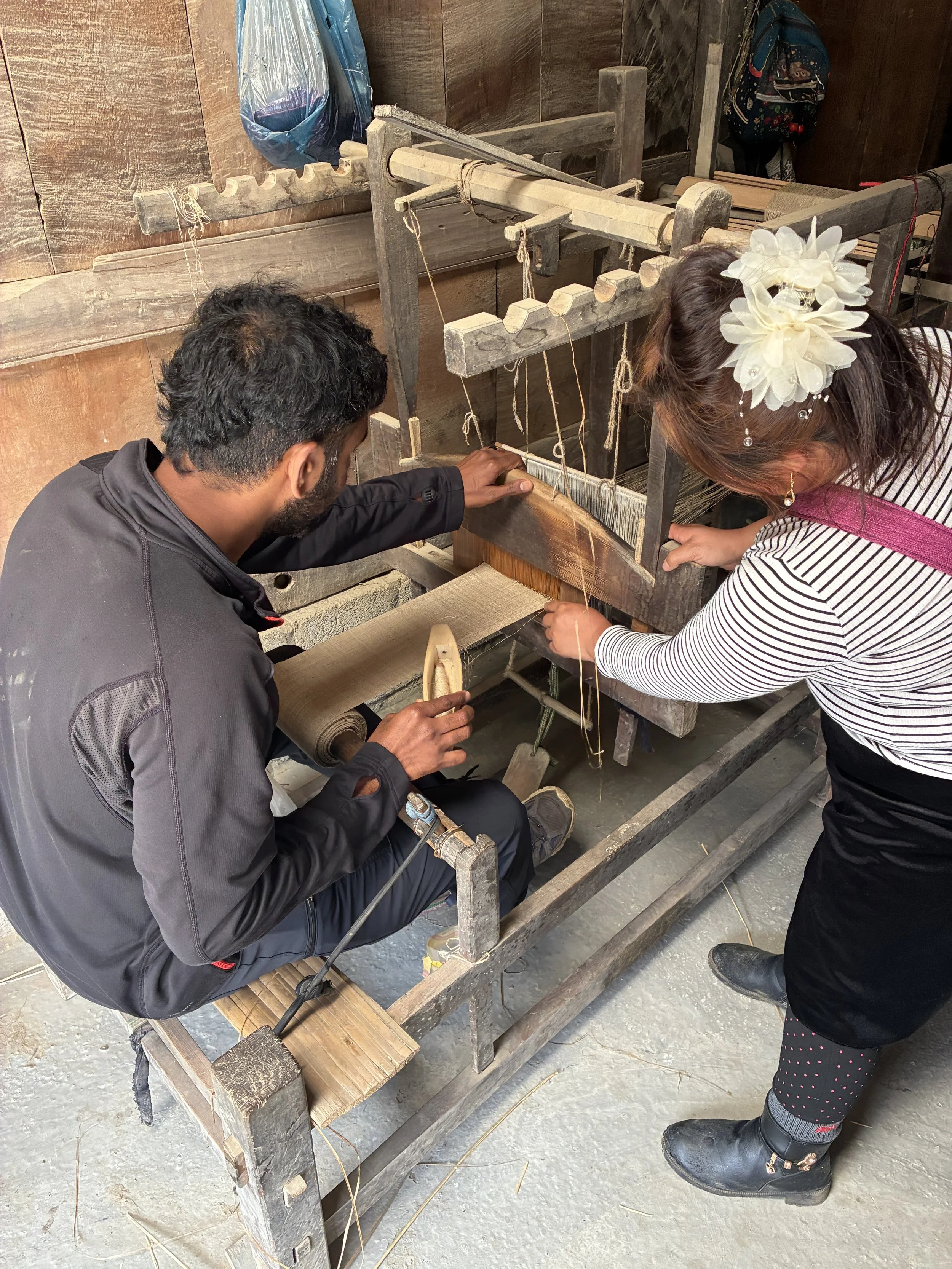
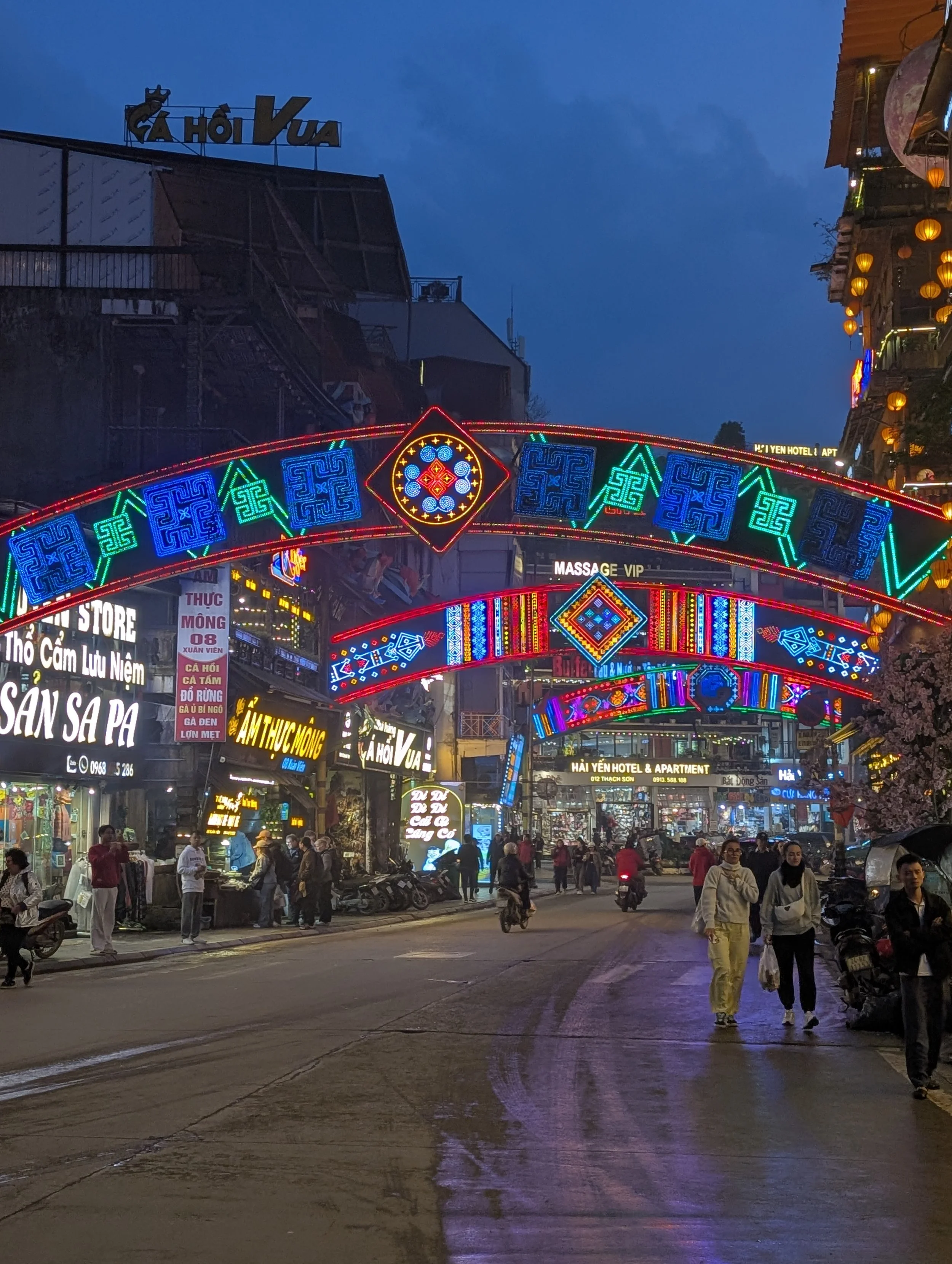
We traveled north of the capital to the mountain town of Sa Pa. Forty minutes from town, in Ta Van, a local Hmong woman led us through a Batik workshop. I asked her about the availability of healthcare for women in remote regions. She said in her lifetime better roads have made the hospital easier to access. More women survive complications in childbearing than in her mother’s generation but pregnancy was still a serious peril for women in more remote areas.
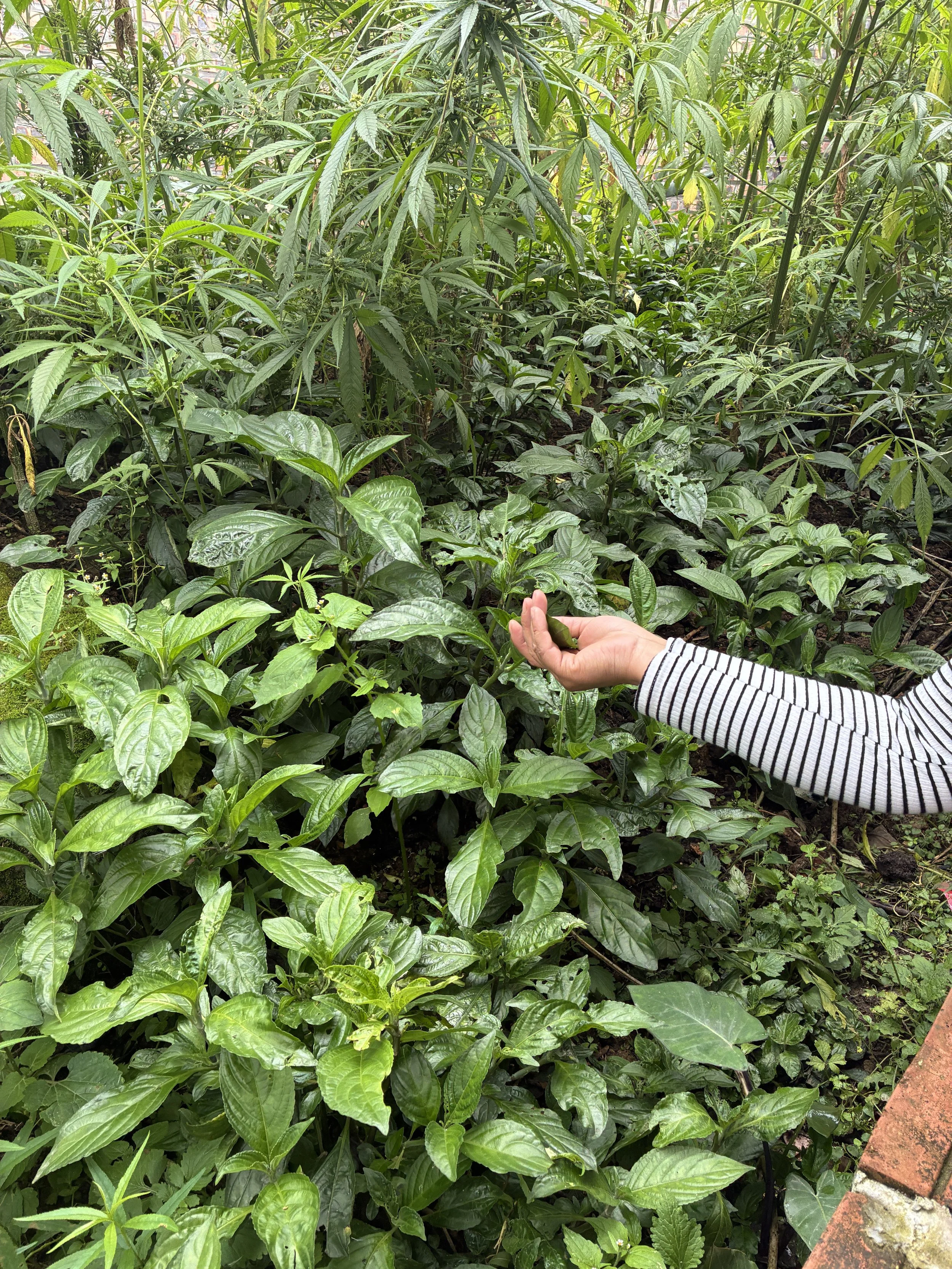
While our mini tapestries luxuriated in the indigo bath, we walked with our guide around the village. She pointed out traditional tools of hemp production and rubbed indigo leaves across my palm. She told us about the local schools and we hopped across the stream by a fish hatchery. Gliders spiraled above and tour groups hustled by on spongy paths between the rice fields. I wondered what she hoped for her children? Was all this tourism going to improve their quality of life? Her daughter wants to be a trekking guide; her son wants to move to Hanoi. She said he was too lazy for trekking and I don’t blame him.


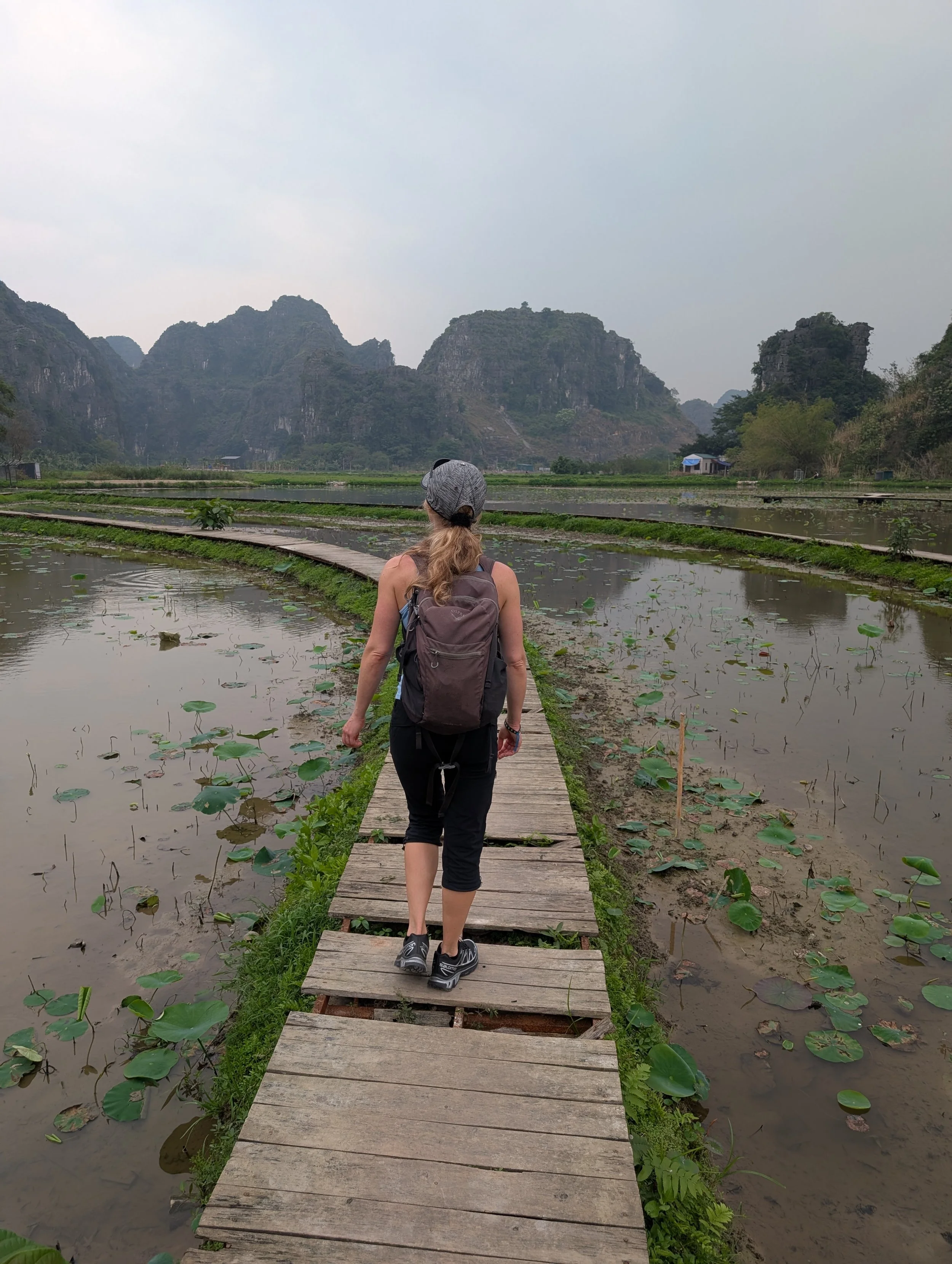

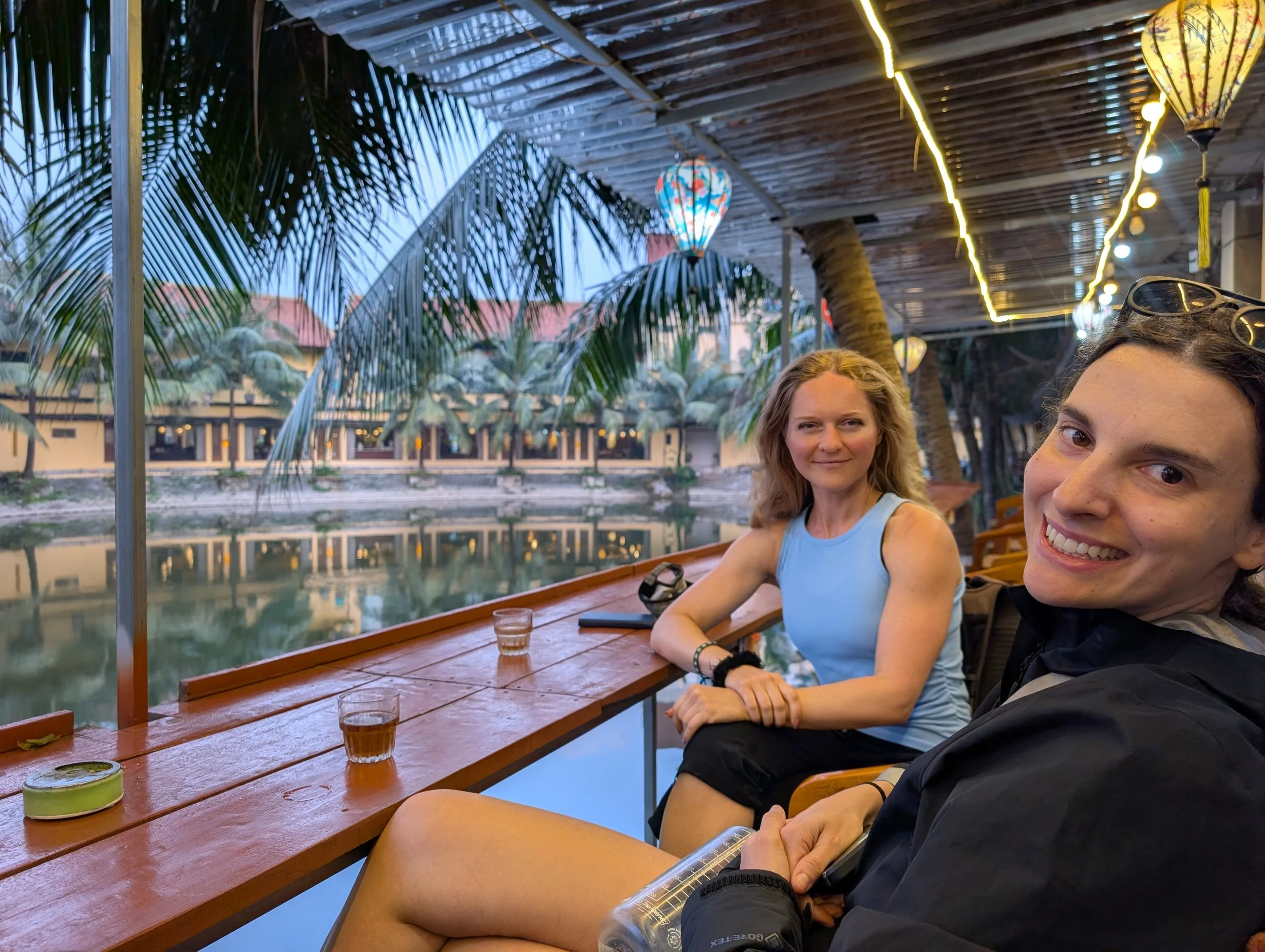
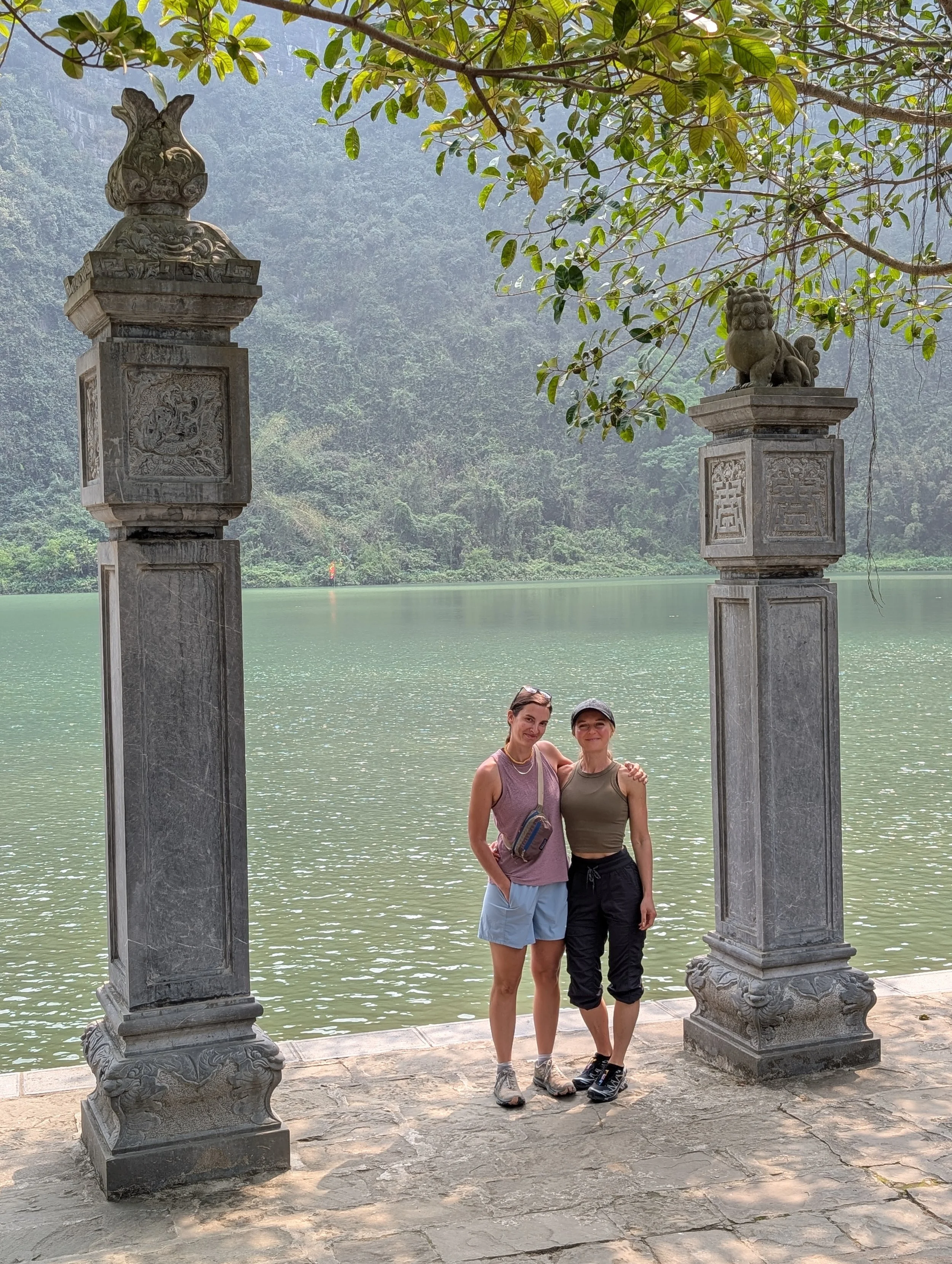

Highlights
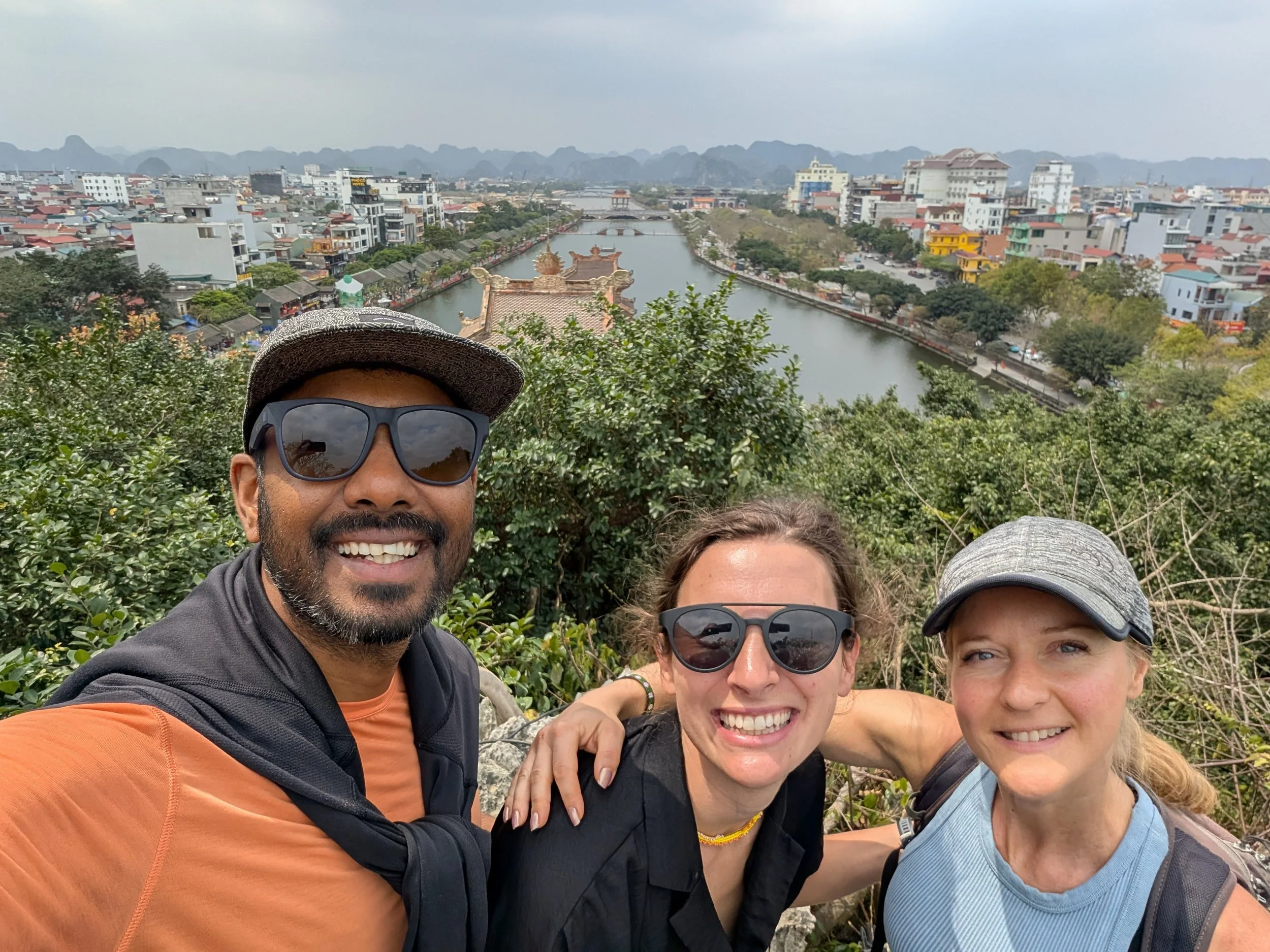
Meeting up with Daria! A close friend to Rocky during his Asheville dayz, we really loved spending more time with her as our travel plans overlapped in Vietnam.
The most delicious coffee at Hanoi Coffee Station
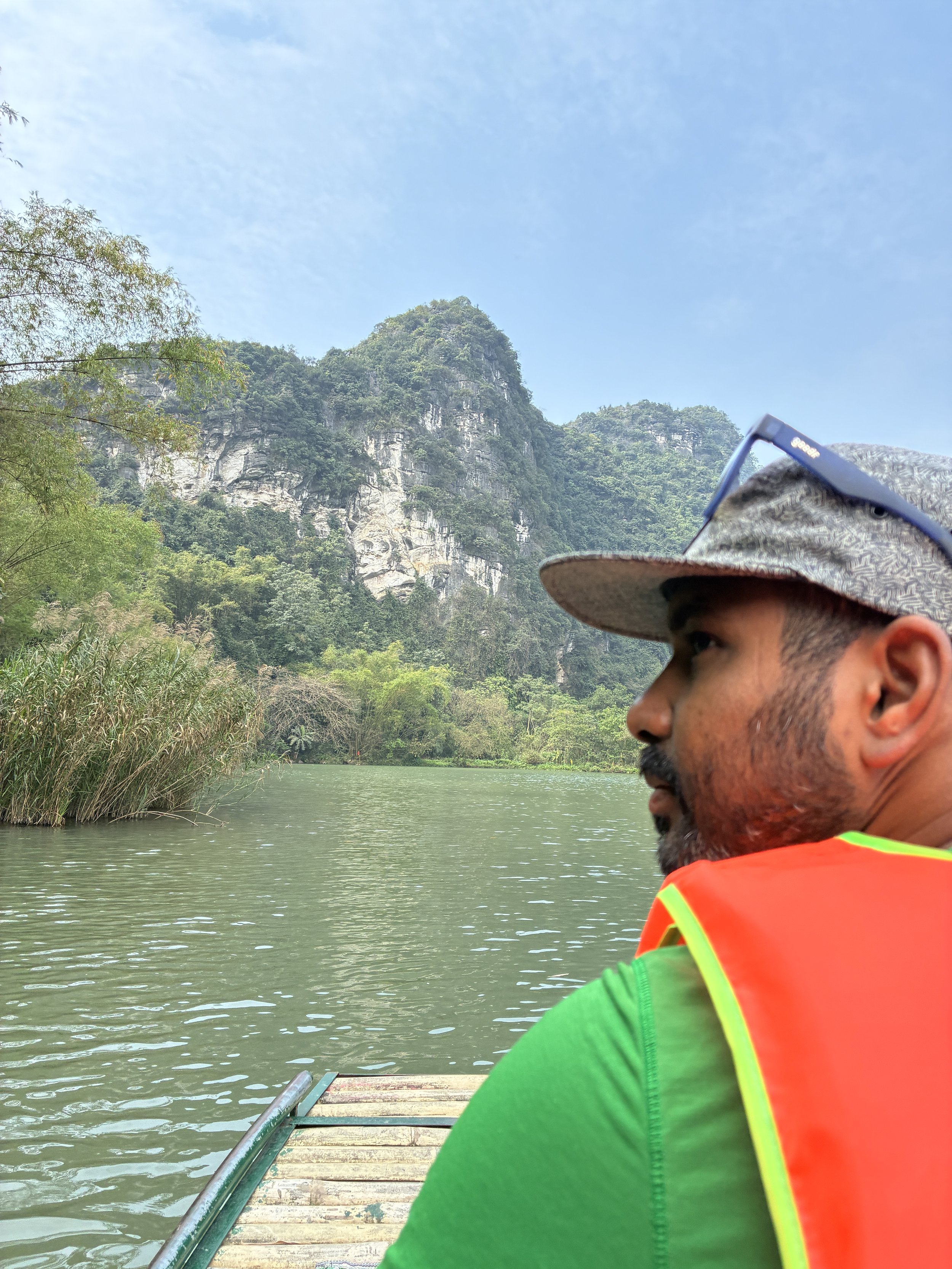
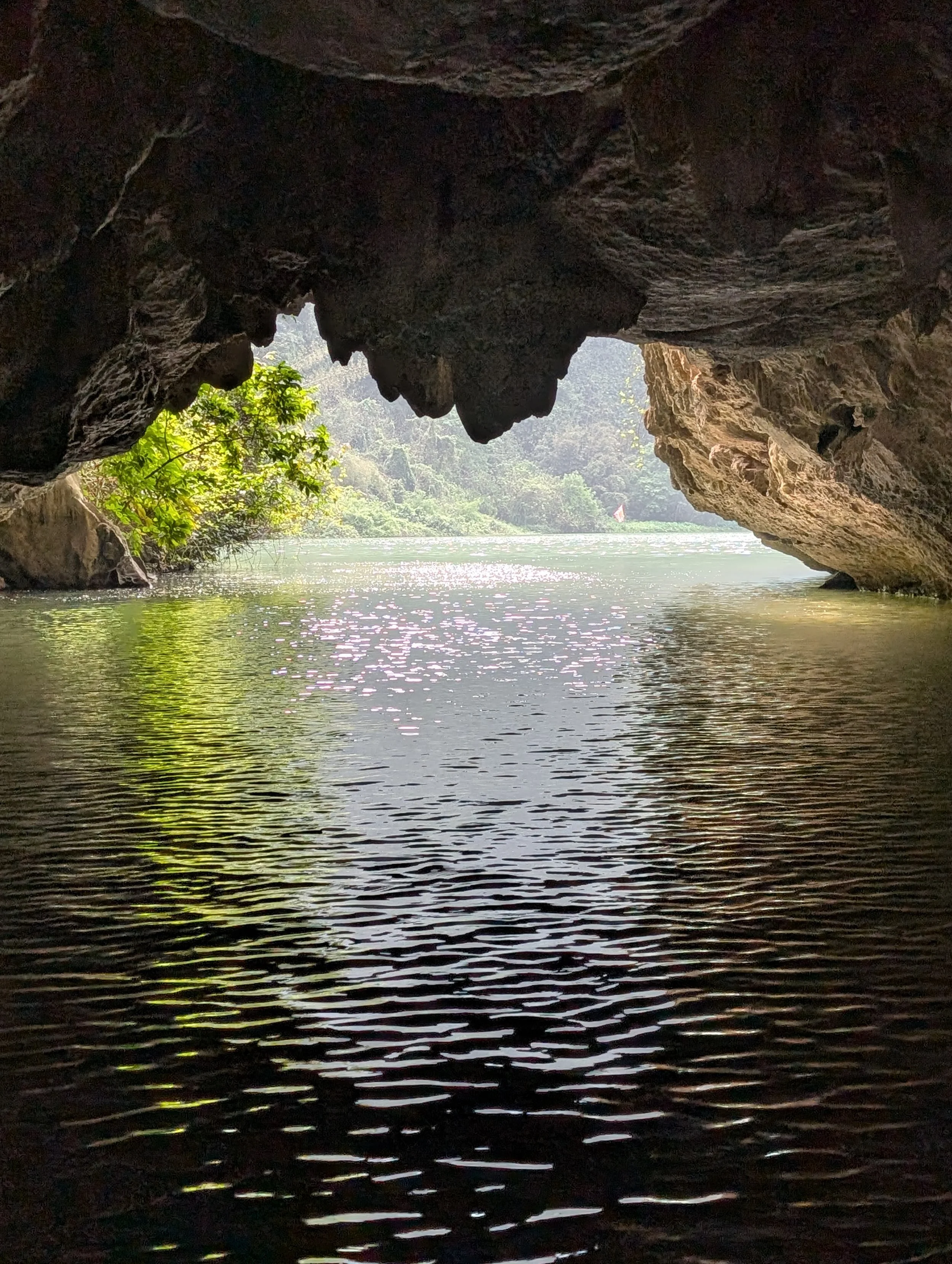
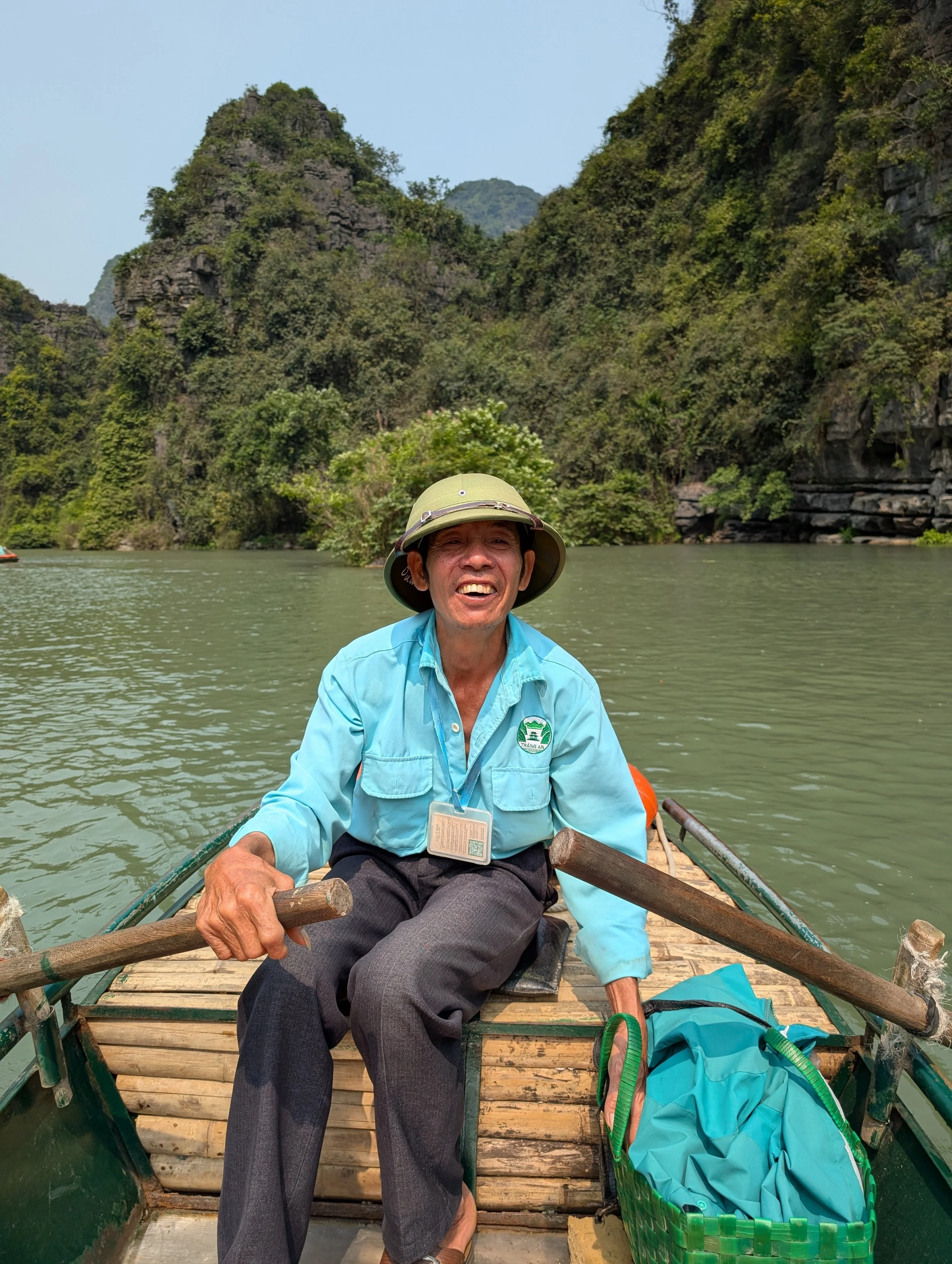
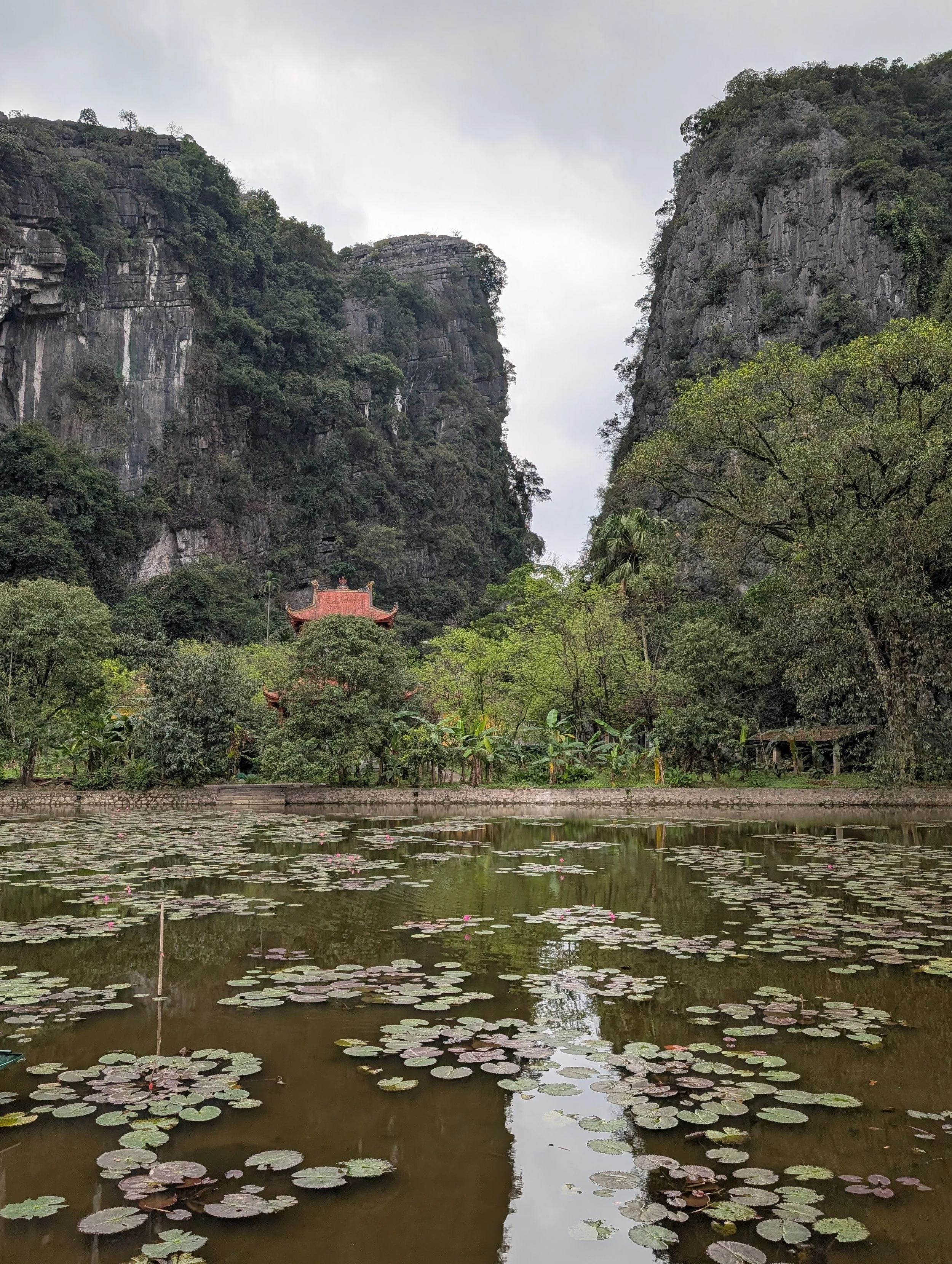
Boat ride through caves (!!!) via Trang An Eco-Tourism Complex
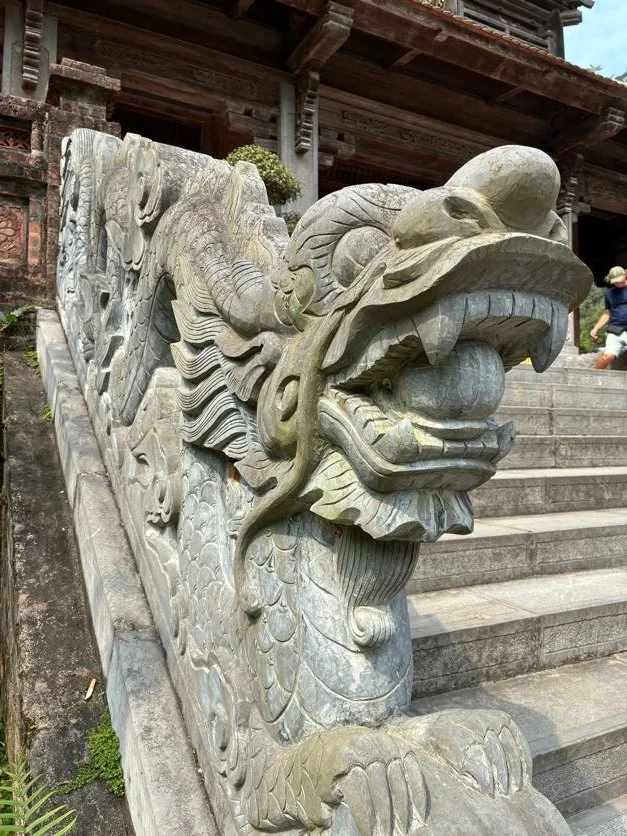
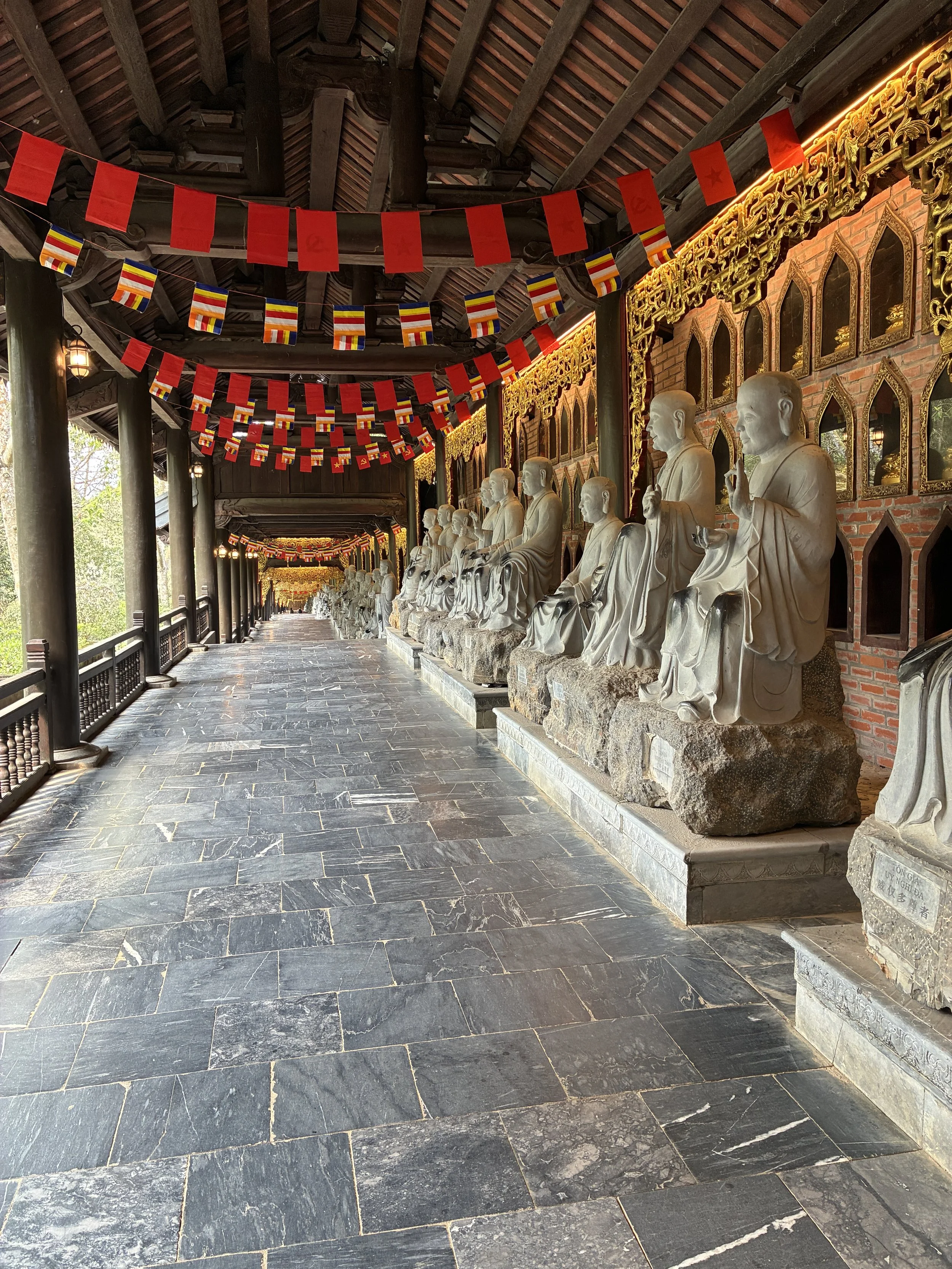
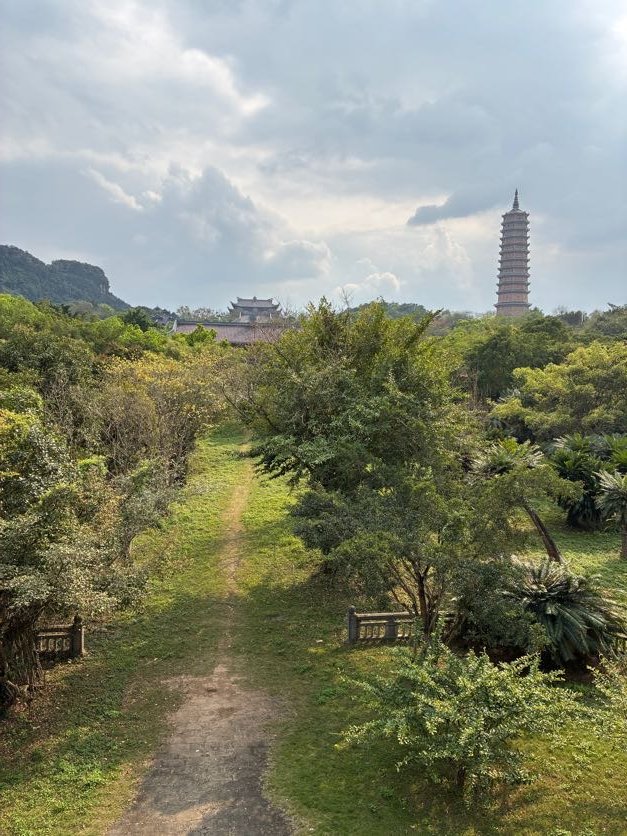
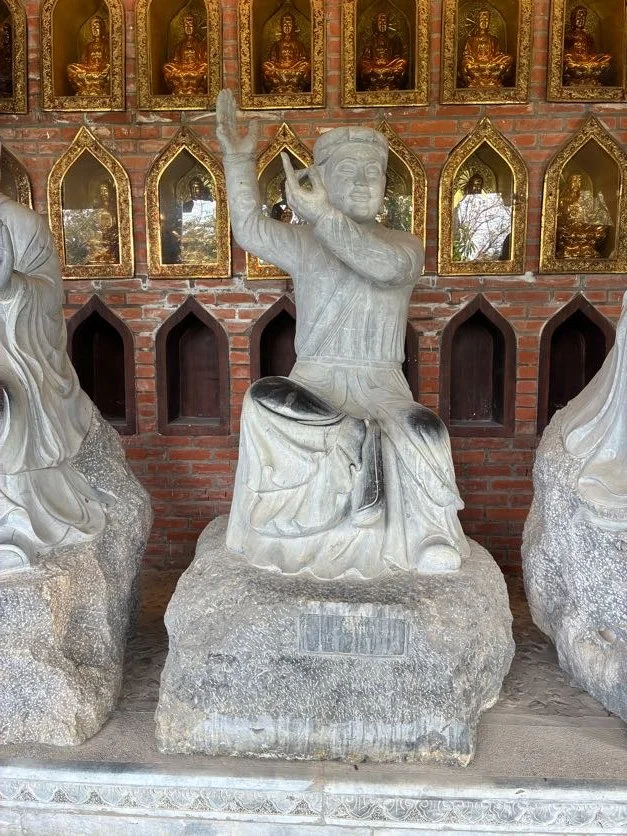
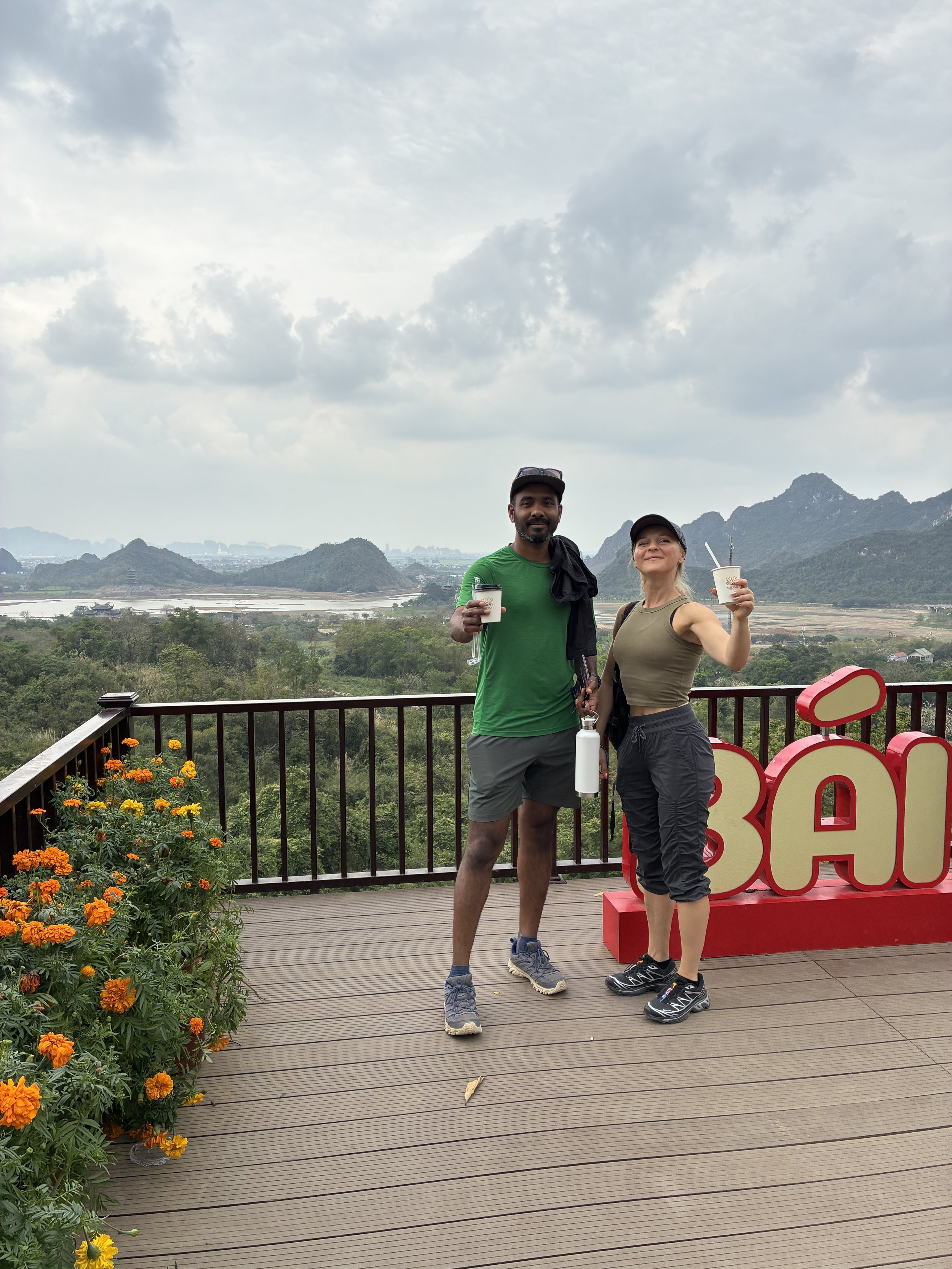
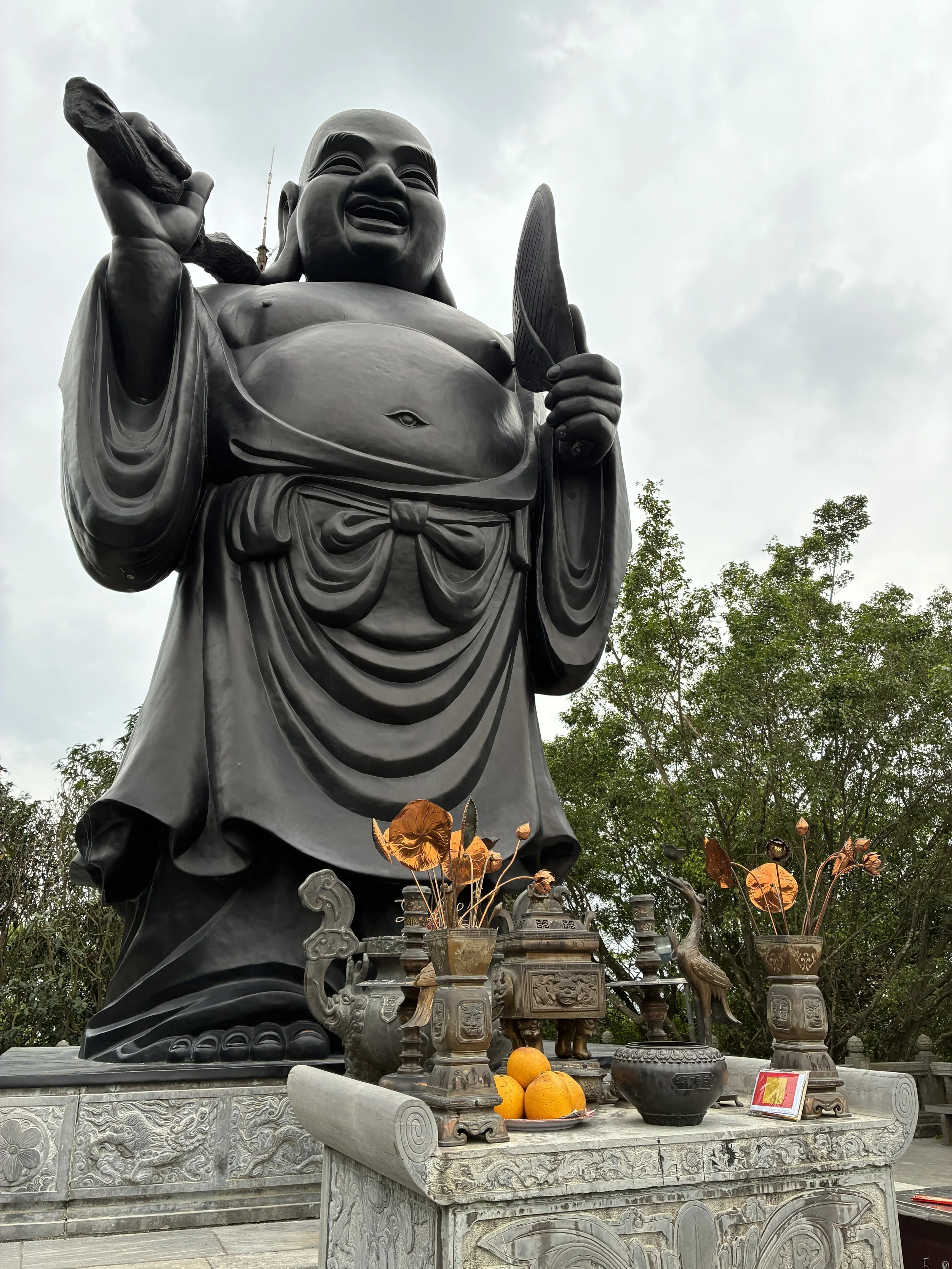
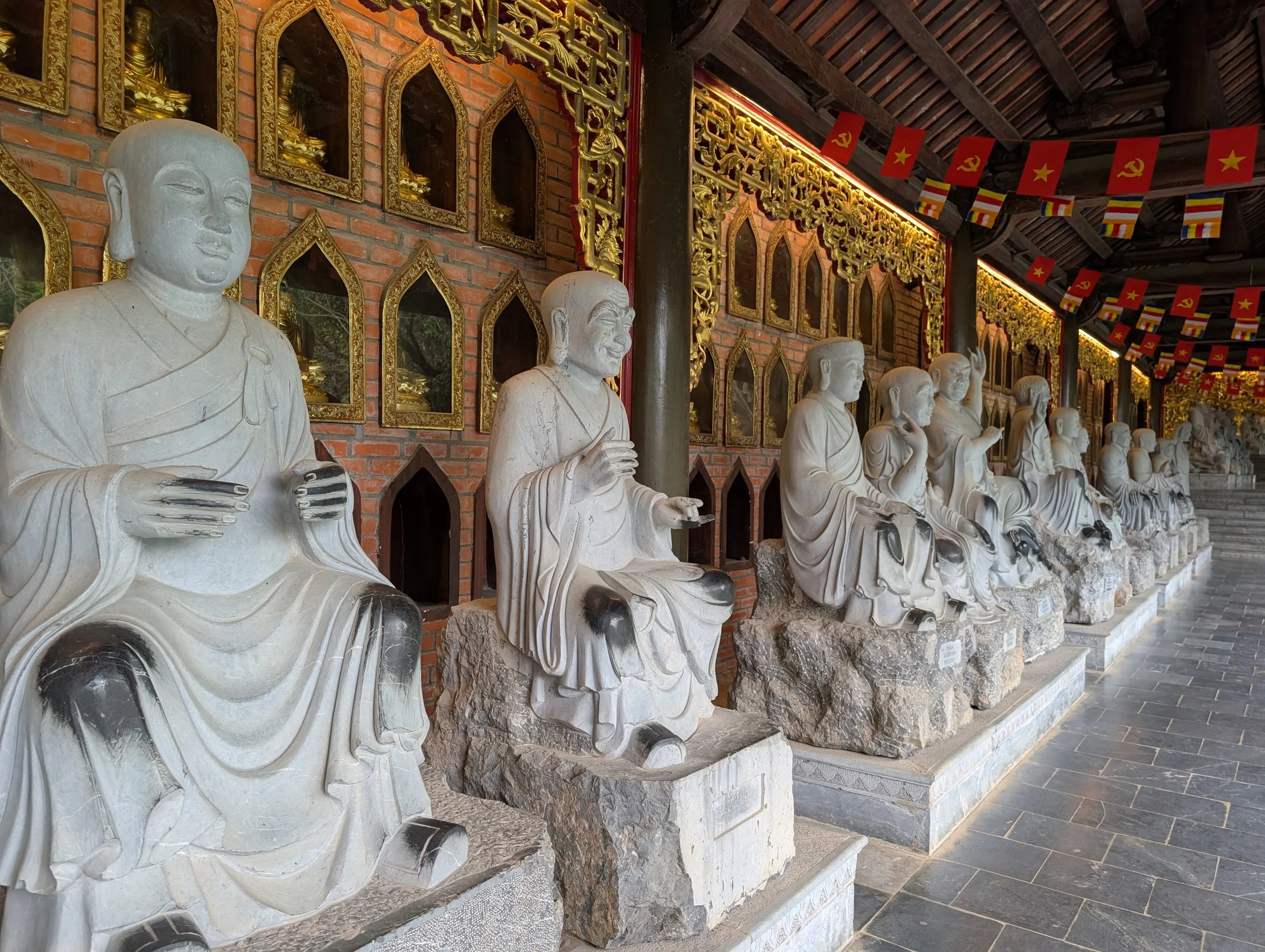
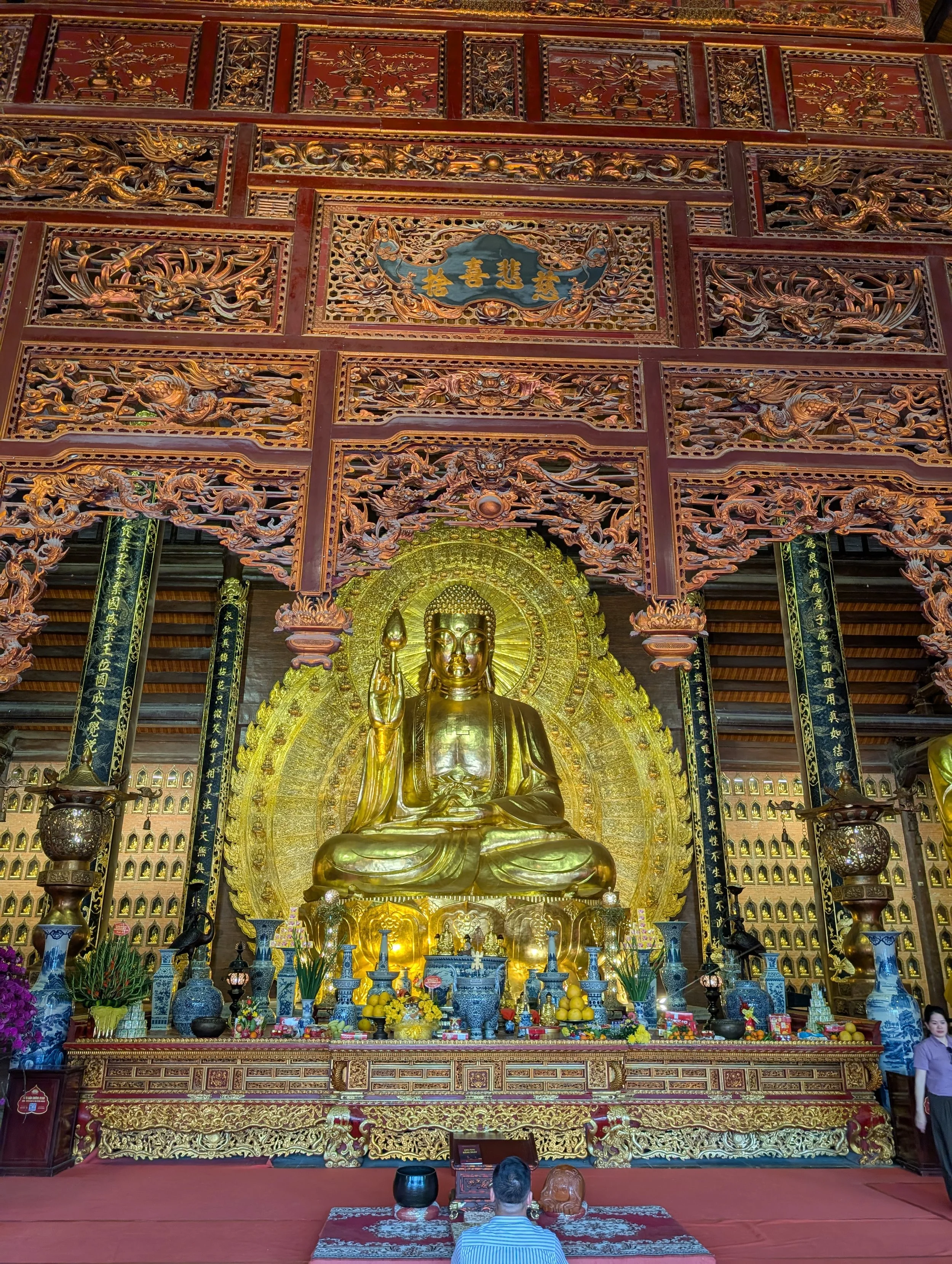
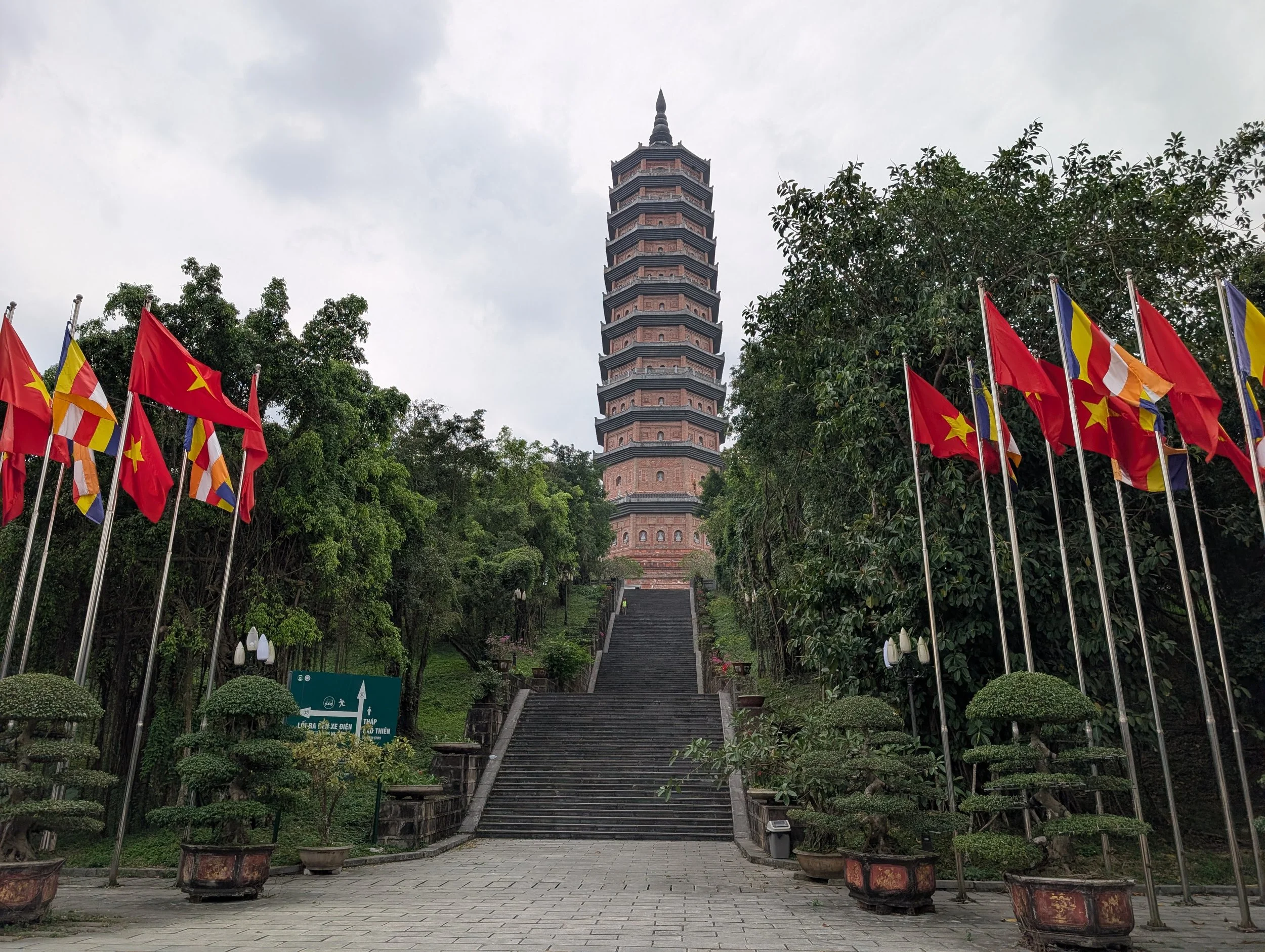
Bai dinh Temple complex
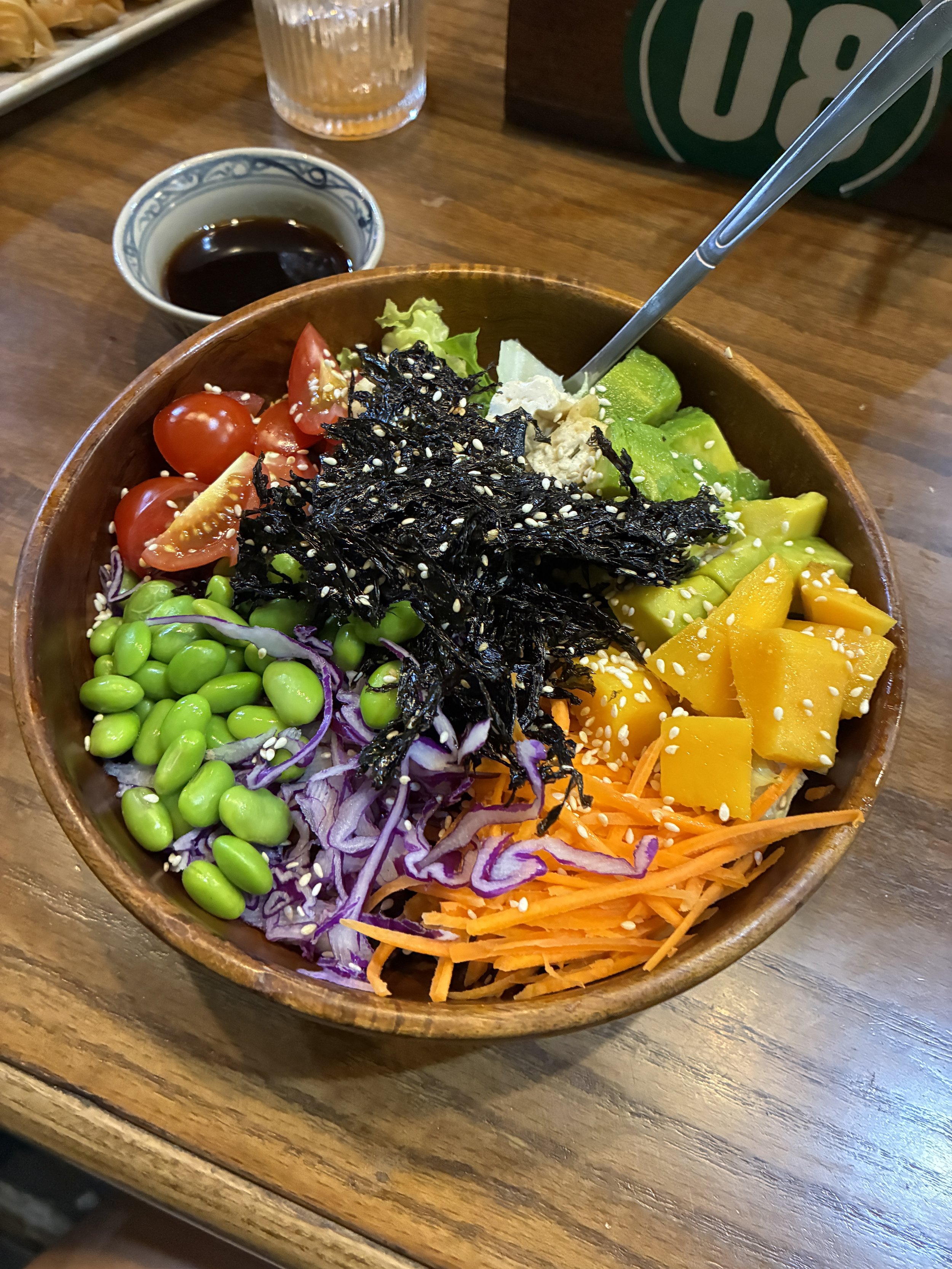
A floor made of pebbles at Su Vegetarian restaurant
A strawberry crocheted caked at Em O Day Bakery
Pavi Garden Restaurant- pizza among the rice fields on our way down into Ta Van